

Australia
Assessment
Resolution approach for income apportionment: impact analysis
Income apportionment was a long-standing practice of the Australian Government, dating back to the early 1990s, adopted to calculate social security debts. The historical use of income apportionment is now understood to be generally unlawful. This Impact Analysis considers a number of options for resolving historical debts calculated using income apportionment.
Report
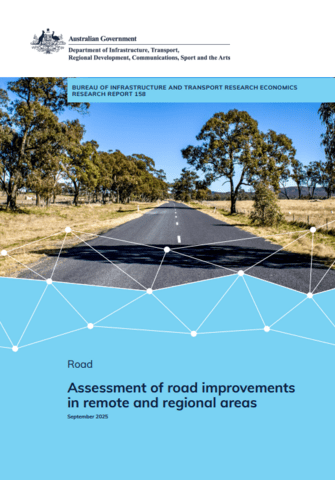
Assessment of road improvements in remote and regional areas
This report addresses the challenge that low traffic volumes in remote and regional areas make it difficult for traditional cost-benefit analysis methods to support road improvements in these areas in line with community expectations and government policy objectives. It develops ways to improve the efficiency, equity and transparency of decision-making for road funding in these...
Report
Australian science, Australia’s future: science 2035
This report examines the capability of Australia’s science system, its ability to compete and collaborate globally, and its contribution to the nation’s economy, security, health and quality of life. An investigation of scientific capability needs by 2035 found Australia has gaps – in workforce, infrastructure and coordination – that will cripple its ability to meet...
Report
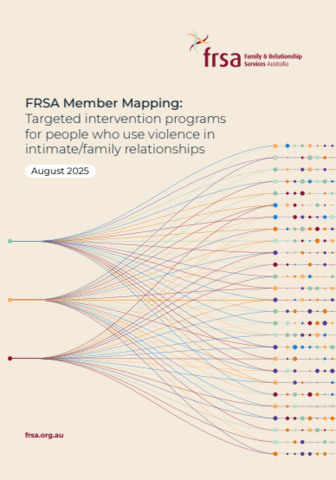
FRSA member mapping: targeted intervention programs for people who use violence in intimate/family relationships
Almost 6,000 people who use violence in their relationships engage in Family & Relationship Services Australia (FRSA) member programs each year. This report was undertaken to build a picture of the footprint of members that deliver targeted intervention programs. It calls for these programs to be recognised as critical entry points for family safety.
Position paper
Position statement: immunisation
Australia’s immunisation landscape is rapidly shifting. This position statement reaffirms immunisation as the most effective public health intervention and calls for renewed efforts to rebuild trust, improve access and boost vaccination rates across all communities. It outlines barriers to implementation and highlights the urgent need for new strategies to boost immunisation rates.