

Australia
Survey Report
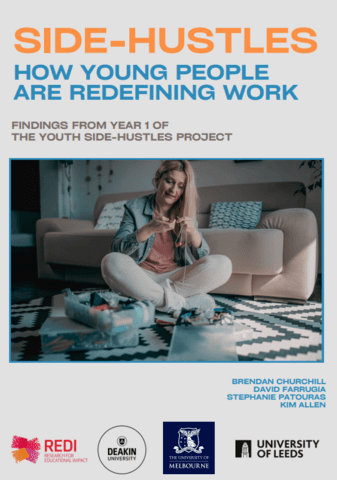
Side-hustles: how young people are redefining work
Side-hustles are small-scale entrepreneurial activities undertaken alongside formal employment. This report presents findings from a project that explores the characteristics and experiences of young people with side-hustles. The findings challenge dominant narratives of hustle culture and calls for policy approaches that centre secure, meaningful employment for young people.

Guide
Safe research partnership with people with lived and living experience
A checklist and guide to use when research is being conducted with people who have lived or living experience of mental illness or ill health. The resources have been designed to support safe and empowering lived experience partnerships in research.
Report
A right to learn: economic cost of suspensions for Queensland students with disability
An analysis of the economic impacts of suspending students with disability from school in Queensland. It presents key findings, data sources and an overview of the qualitative impacts considered in the analysis. It finds children with disability are disproportionately represented in school suspensions in Queensland and across Australia.
Report
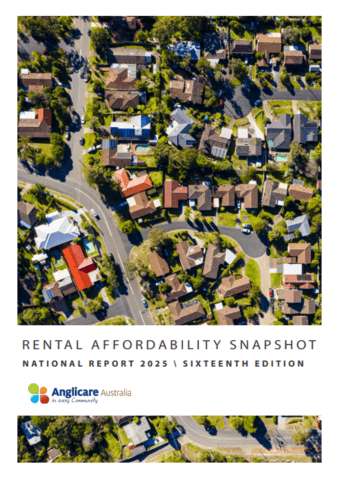
Rental affordability snapshot: national report 2025
Australians on the lowest incomes are struggling to pay the rent in electorates across the country. This snapshot surveyed 51,238 rental listings across Australia. The report argues that choices made by governments over the last 40 years have entrenched inequality in Australia’s private rental market.
Discussion paper
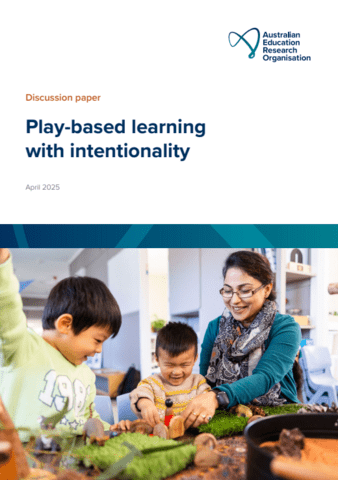
Play-based learning with intentionality
Intentional teaching is widely regarded as a key teaching practice within early childhood education and care settings. It involves educators making deliberate, thoughtful decisions to achieve quality learning outcomes for children. This discussion paper synthesises evidence related to intentional teaching in early childhood and highlights gaps in the evidence base.