

Australia
Guide
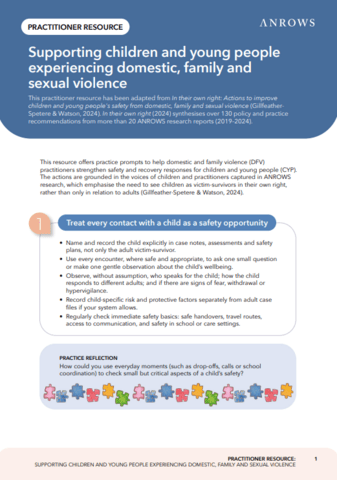
Supporting children and young people experiencing domestic, family and sexual violence
This resource supports frontline workers to strengthen safety and recovery responses for children and young people experiencing domestic, family and sexual violence. Focused on translating evidence into everyday practice, the resource is particularly relevant for practitioners working in regional and rural contexts, where service gaps, confidentiality risks and workforce pressures shape how support is delivered.
Report
Report 514: Inquiry into the procurement of mandated national support and advocacy services for victims of child sexual abuse
A report from an inquiry into the procurement process conducted by the Attorney-General’s department to deliver new child sexual abuse-related national services. These procurements arose from the recommendations of the 2017 Royal Commission into Institutional Reponses to Child Sexual Abuse. The report found the length of time taken to progress these procurements was deeply concerning.
Journal article
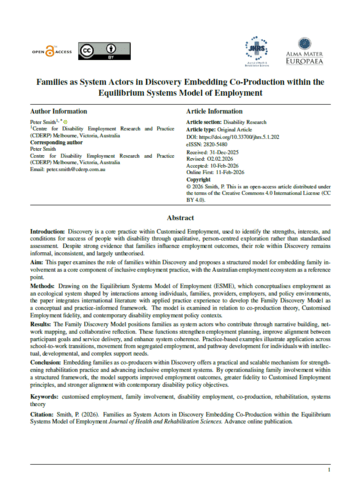
Families as system actors in discovery embedding co-production within the Equilibrium Systems Model of Employment
This paper examines the overlooked role of families within Customised Employment. It introduces the Family Discovery Model, positioning families as active contributors to narrative building, network mapping and reflective planning. Structured involvement strengthens employment pathways, supports transitions, and improves alignment with policy. Embedding families as co-producers enhances outcomes and system coherence.
Briefing paper
Media policy and regulation: what to expect in 2026
The Australian Government has set itself a busy agenda of media regulatory reform. It has already implemented several changes since coming to office, however numerous promised media policies remain unrealised. This paper briefly outlines key pieces of media policy and regulation that may be expected in 2026.
Guide
Culturally appropriate human rights compliant: police custody monitoring expectations
A suite of practical resources to support police custody oversight and strengthen domestic implementation of the Optional Protocol to the Convention against Torture and other Cruel, Inhuman or Degrading Treatment or Punishment (OPCAT). They are living documents that can be adapted and updated by individual National Preventive Mechanism domestic monitoring bodies as suits them best.