

Victoria
Fact sheet
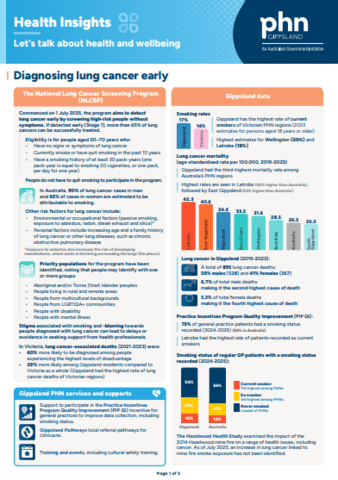
Health insights: diagnosing lung cancer early
This factsheet provides insights and statistical data on lung cancer in Gippsland, Victoria. It presents information on the National Lung Cancer Screening Program, Gippsland health data, community and professional perspectives, and opportunities to improve. Gippsland has the highest rate of current smokers of Victorian Primary Health Network regions.
Report
‘A moment of reckoning’: recent developments in Victoria’s child safety framework
Victoria, along with other federal, state and territory governments, have worked together to enact a coordinated legislative and regulatory response to child safety in Victoria’s early childhood education and care (ECEC) sector. This paper summarises the events and discussions that have resulted in these reforms, including the series of reports since 2015 that have highlighted...
Report
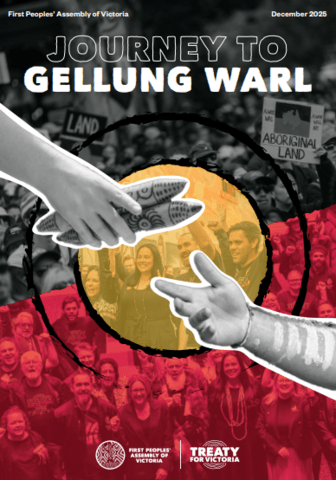
Journey to Gellung Warl
Since 2019, the First Peoples’ Assembly of Victoria has been yarning with Community across the state. This report outlines how these ideas were brought to the negotiating table, ensuring self-determination at the heart of Australia’s first ever Treaty. The report presents the treatymaking ecosystem, working with community, getting treaty done and what is in the...
Policy
Statewide Treaty Declaration
The Declaration affirms the importance of First Peoples’ Lore, law, rights, responsibilities and sovereignty. The Declaration was written by Assembly Members to Community about the first statewide Treaty in Victoria. The Statewide Treaty Declaration outlines the key components that comprise Gellung Warl, and the roles the community will play in the Treaty era.
Report
Promising practices in gender-responsive mental health care
This report looks at mental health reform in Victoria, illustrating what gender-responsive mental health care looks like in practice and highlights promising practices that can inform system-wide reform. It explores how gender inequity shapes mental health experiences and outcomes, and why gender-responsive principles must be foundational in mental health policy, service design and system reform.