

Report
Report
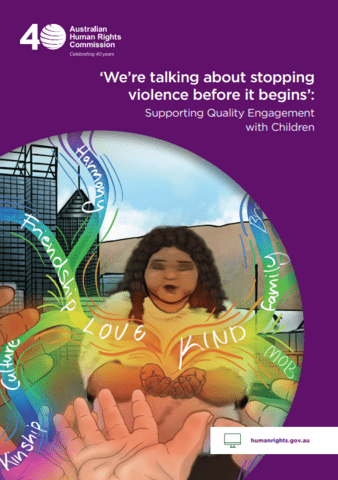
‘We’re talking about stopping violence before it begins’: supporting quality engagement with children
This third and final report from the Supporting Quality Engagement with Children consultation project focused on the National Plan to End Violence Against Women and Children 2022-2032, in particular prevention and early intervention. It shares the views of over 300 children and young people across all Australian jurisdictions. The report contains eight recommendations.

Report
Early childhood education and care sector in New South Wales
This report provides an overview of the early childhood education and care sector in New South Wales, including issues relating to safety, quality, workforce, regulatory framework, data collection and the experiences of children with disability. The report finds the system is under strain and makes a range of recommendations for improvement.
Report
Administration of the Freedom of Information Act 1982 by selected entities
The objective of this audit was to assess whether the selected entities’ administration of the Freedom of Information Act 1982 (FOI Act) requests is effective in giving the community access to Australian Government information. Six recommendations were made to the audited entities to improve their administration of FOI Act requests.
Report
Evidence over ideology: protect children by restoring clinical standards in climate anxiety treatment
This report examines how climate-related anxiety is being addressed in clinical and educational settings. It critiques emerging psychological responses which may inadvertently reinforce distress rather than alleviate it. The report proposes practical steps for schools to ensure that environmental issues are taught in developmentally appropriate ways.
Report
“Like oil and water”: exploring distance education for First Nations students
This interjurisdictional report critically examines the provision of distance education for First Nations students in ‘remote’ Australia, highlighting systemic barriers, cultural mismatches and opportunities for reform. It reveals how distance education models, founded in settler-colonial pedagogies and reliant on digital infrastructure, often fail to meet First Nations learners’ needs.