

Report
Report
Shaping & fuelling change: the role & practices of philanthropy in the social enterprise ecosystem in Australia
The report examines the role of philanthropy in social enterprise in Australia. It highlights how philanthropy has played a critical role in building shared infrastructure, supporting key moments in the sector, and piloting approaches later taken up by government. It calls for a shift towards longer-term and more flexible approaches that support systems change.
Report
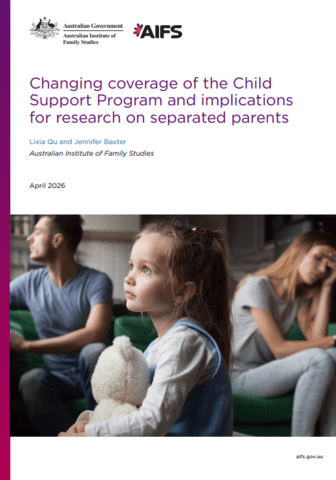
Changing coverage of the Child Support Program and implications for research on separated parents
This report examines the extent to which cohorts of families are using the Child Support Scheme compared to nearly a decade ago. It is important to understand the drivers of the decline in the Child Support Program coverage and how separated parents, especially main carers, meet the financial needs of their children.
Report
25 years of false starts: a new approach to tax reform
By identifying the forces that have repeatedly undermined tax reform in Australia, this report explores whether a different approach could help Australia move beyond repeated false starts and build a more credible pathway for future change. It finds that reform failure over the last 25 years is rarely attributable to a single factor.
Report
Organ and tissue donation and transplantation project final report
The report from a review of Australia's organ donation, retrieval and transplantation system. The key findings show a variation in how states and territories capture data and apply costing guidelines. The report identifies 15 recommendations. These address gaps in the complexity of data collection, reporting, costing and funding of organ and tissue donation and transplantation...
Report
Taiwan matters: how the status quo underpins Indo-Pacific peace and prosperity
A compendium of analytical perspectives examining why the preservation of the status quo in the Taiwan Strait is so critical to Indo-Pacific peace and prosperity. The essays explore Taiwan’s economic centrality, its democratic identity and the strategic dynamics that shape its future. They also provide a framework for thinking about deterrence, resilience and preparedness.