

OECD countries
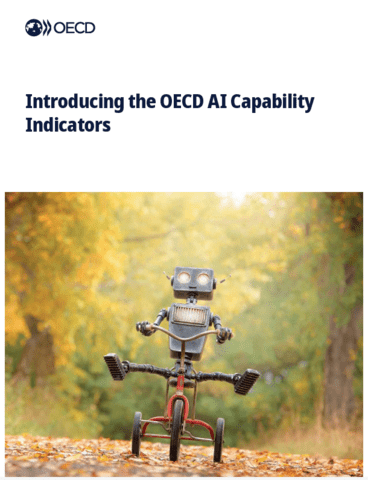
Report
Introducing the OECD AI Capability Indicators
This report introduces the OECD’s beta AI Capability Indicators, designed to assess and compare AI advancements against human abilities. The indicators cover nine human abilities: language, social interaction, problem solving, creativity, metacognition and critical thinking, knowledge, learning and memory, vision, manipulation and robotic intelligence. They provide a framework for policymakers to understand AI's potential impacts.
Report
OECD economic outlook: tackling uncertainty, reviving growth
This report provides a macroeconomic assessment for OECD countries. It notes that global economic prospects are weakening, with the slowdown expected to be most concentrated in the United States, Canada, Mexico and China. For Australia, the report predicts a return to modest growth in 2025-26 but identifies several fiscal and policy actions needed to address...
Report
Entrepreneurial ecosystem diagnostics
This report introduces a multi-dimensional framework to assess and compare entrepreneurial ecosystems across all OECD countries. Designed as a policy support tool, the report provides evidence-based insights to identify systemic bottlenecks and guide national strategies. It aims to facilitate informed dialogue and targeted policy action to build dynamic and balanced national entrepreneurial ecosystems.
Report
OECD supply chain resilience review
This report examines how countries can navigate risks through agile, adaptable and aligned supply chains. It explores trade dependencies, the costs of relocalisation, and how digitalisation and sustainability can shape stronger global supply chains. The report makes recommendations for how governments can manage risk and promote resilient supply chains.
Report
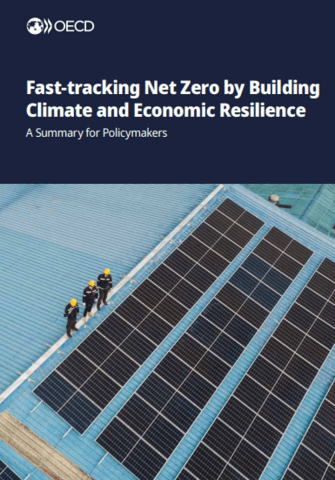
Fast-tracking net zero by building climate and economic resilience: a summary for policymakers
This summary report for policymakers shows that reaching net zero is still possible but requires urgent action. It also discusses the importance of public support; trade, investment and finance; climate adaptation; and bridging knowledge gaps to improve the effectiveness of climate policies.