

 SHARE
SHARE
Early intervention developmental programming and childhood academic outcomes

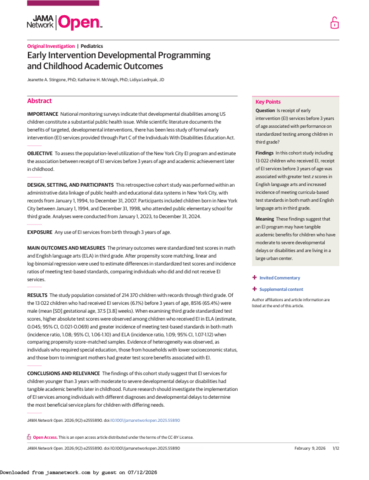
National monitoring surveys indicate that developmental disabilities among American children constitute a substantial public health issue. While scientific literature documents the benefits of targeted, developmental interventions, there has been less study of formal early intervention (EI) services. This retrospective cohort study was performed within an administrative data linkage of public health and educational data systems in New York City.
The study population consisted of 214,370 children. When examining third grade standardised test scores, higher absolute test scores were observed among children who received EI when comparing propensity score-matched samples. Evidence of heterogeneity was observed, as individuals who required special education, those from households with lower socioeconomic status, and those born to immigrant mothers had greater test score benefits associated with EI.
The findings of this cohort study suggest that EI services for children younger than 3 years with moderate to severe developmental delays or disabilities had tangible academic benefits later in childhood. Future research should investigate the implementation of EI services among individuals with different diagnoses and developmental delays to determine the most beneficial service plans for children with differing needs.
