

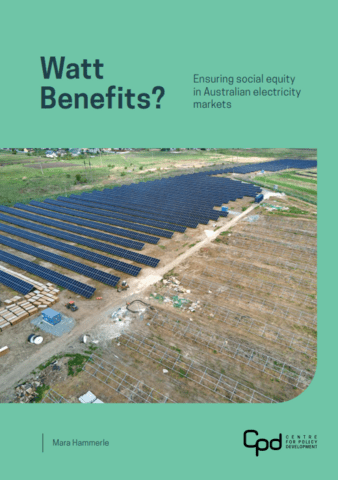
Report
Watt benefits? Ensuring social equity in Australian electricity markets
Reaching net zero means nothing short of a complete overhaul of Australia's energy system. This report outlines ways governments, developers and the energy sector can ensure the energy transition is fair, supports the people and communities affected, and builds social licence for long-term success. It sets out three principles for an inclusive net zero economy.
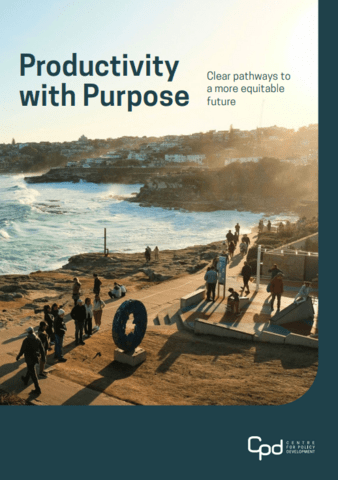
Report
Productivity with purpose: clear pathways to a more equitable future
This report reframes the national productivity debate – arguing that rather than pursuing productivity growth for its own sake, its purpose must be clarified: to lift living standards, improve wellbeing and accelerate the transition to net zero. It lays out practical, achievable reforms and provides recommendations on three key themes: a dynamic and more resilient...
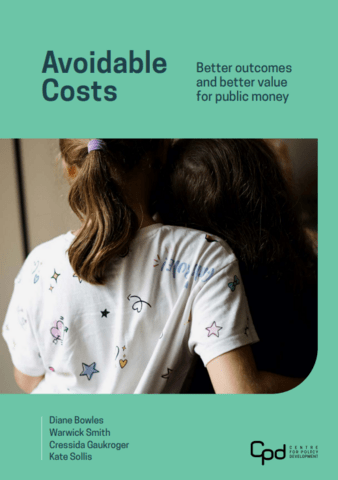
Report
Avoidable costs: better outcomes and better value for public money
This report illustrates the substantial direct costs governments incur by failing to address the root causes of social and environmental issues. The report uses three examples – childhood poverty, preventable disease and chemical contamination – to illustrate the extent of avoidable spending, and make the fiscal case for tackling issues as early as possible.
Guide
The climate solutions advantage: a playbook for communicating the economic benefits of climate solutions to Australian mid-tier businesses
While many large enterprises already recognise the financial imperative of emissions reduction, many mid-tier businesses are being left behind – often due to a lack of tailored, actionable information. This guide aims to help large organisations and industry associations champion climate action across Australia’s mid-tier business sector. It provides clear, compelling messages to communicate the...
Briefing paper
Budgeting for natural disasters
Natural disasters like bushfires, floods and cyclones aren’t rare or unpredictable. They’re inevitable and should be planned and budgeted for accordingly. But currently, the federal budget only includes disaster recovery spending for events that have already happened. This paper argues that estimated future disaster costs should be included in existing budget lines.