

Organisation
Department of Health and Aged Care (Australia)
Owning Institution:
Acronym:
DHAC
Current name:
Former name:
Strategy
Statement on sex, gender, variations of sex characteristics and sexual orientation in health and medical research
This joint statement with the National Health and Medical Research Council (NHMRC) and the Department of Health and Aged Care has been prepared to help make health and medical research more inclusive. The purpose of the statement is to improve health outcomes by improving knowledge of research gaps related to historical underrepresentation of sex, gender...
Journal article
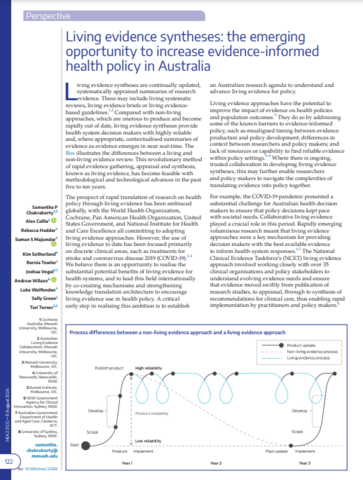
Living evidence syntheses: the emerging opportunity to increase evidence‐informed health policy in Australia
Living evidence syntheses are continually updated, systematically appraised summaries of research evidence. These may include living systematic reviews, living evidence briefs or living evidence‐based guidelines. Australia has implemented living evidence for several key clinical concerns; however, the routine implementation of living evidence in health policy is nascent and knowledge gaps remain on how to best...
Strategy
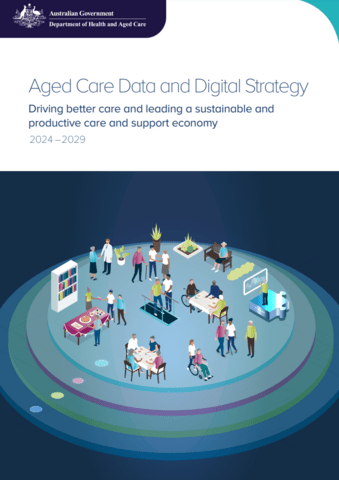
Aged care data and digital strategy 2024–2029
Australia's national strategy for leveraging data and digital technology to enhance the aged care sector. Motivated by an ageing population and a growing demand for care services, the strategy aims to empower older people and their support networks, strengthen the digital capabilities of the workforce and improve data sharing and security.
Discussion paper
Unleashing the potential of our health workforce - Scope of Practice Review: issues paper 2
This issues paper is part of the Scope of Practice Review, and has been released to provide an overview of the evidence collected to date. It also outlines the options for reform based on the sum of this evidence, and describes the direction and next steps for the review.
Guide
Intellectual disability health capability framework
People with intellectual disability have poorer health outcomes compared to people without intellectual disability. This framework aims to equip future health professionals with the required core capabilities to provide quality health care to people with intellectual disability.