

Person
Holly Helprin
Affiliation:
External Profile:
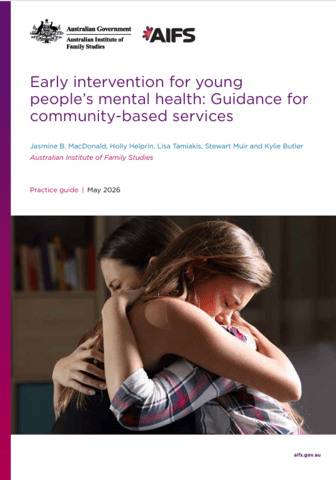
Guide
Early intervention for young people’s mental health
This guide presents a framework for understanding early intervention in community-based mental health supports for children and families. It covers the difference between mental health and mental illness, definitions of the main provision levels of early intervention and challenges to providing early intervention supports.
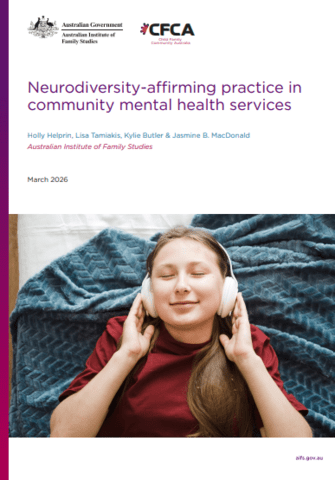
Guide
Neurodiversity-affirming practice in community mental health services
This practice guide presents a framework for family and community services to apply neurodiversity-affirming practice (NAP) to their work with all children, young people and families. NAP is a way of working that aims to provide a safe and supportive service environment that accepts, understands and values neurodiversity.
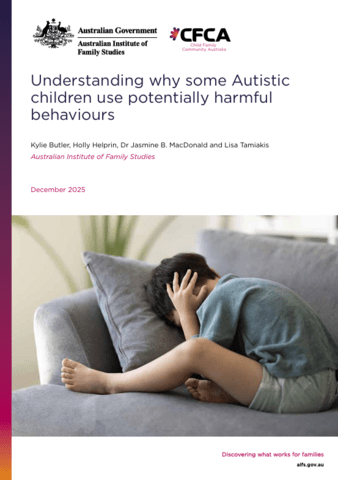
Guide
Understanding why some Autistic children use potentially harmful behaviours
This guide summarises evidence on potentially harmful behaviours (PHB) in Autistic children, showing how PHB may communicate unmet needs linked to neurodevelopmental differences. The guide is for practitioners working with children and young people, parents and families and has been developed specifically for practitioners who have less than 5 years of experience in the child...
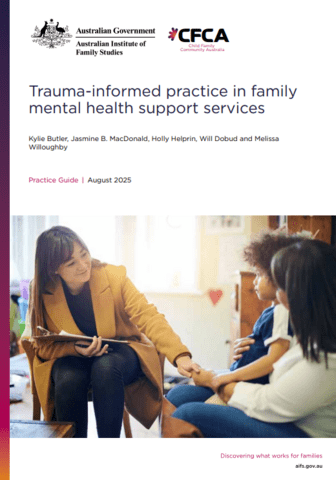
Guide
Trauma-informed practice in family mental health support services
This practice guide summarises research and practice evidence about strategies for trauma-informed practice. It covers what trauma-informed practice is; organisation-level responsibilities for implementing trauma-informed practice and barriers; and trauma-informed practice strategies practitioners can implement.
Fact sheet
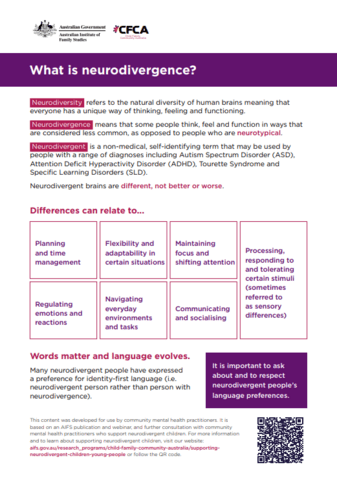
What is neurodivergence?
A short accessible information sheet that defines key terms relating to neurodivergence and addresses some common misconceptions. It is accompanied by practical guides on supporting neurodivergent children and young people. The aim is to enhance readers’ basic neurodivergence literacy, lay the groundwork for further learning and promote informed discussions about neurodiversity.