

Deafness
Alternative labels
Deaf
Video
Empowering inclusive workplaces with JobAccess for employers
Hiring Deaf and hard of hearing staff brings valuable skills but many employers worry about accessibility costs. This webinar explains how the Employment Assistance Fund pays for workplace adjustments like Auslan interpreting and assistive technology. This can help employers learn how to access funding to support teams and help businesses thrive.
Evaluation
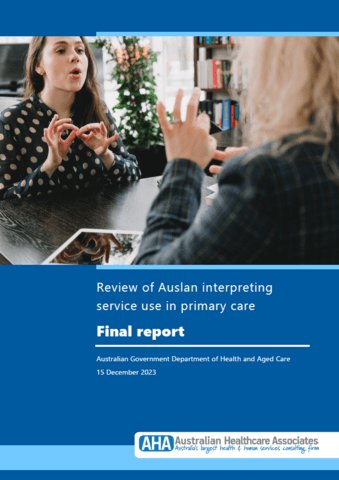
Review of Auslan interpreting service use in primary care
This report outlines key findings about how Deaf Australians access interpreters, identifies barriers to effective use, and highlights recommendations aimed at improving access, service quality and overall patient experience in primary healthcare settings. The report includes associated resources for primary care providers.
Website
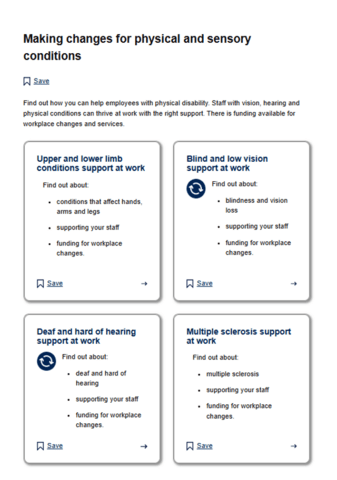
Making changes for physical and sensory conditions
This guide supports employers in building accessible, inclusive workplaces through tailored adjustments for a wide range of disabilities including physical and sensory conditions. Discover practical ways to help employees with vision, hearing and mobility-related disabilities thrive with the right support.
Website
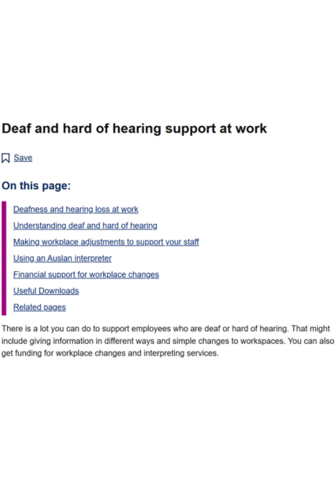
Deaf and hard of hearing support at work
This website provides helpful information about supporting deaf or hard of hearing employees in the workplace, including making workplace adjustments, using an Auslan interpreter and financial support for workplace changes.

Guide
Everyday communication: tips for supporting people with deafness or hearing loss
A practical, easy-to-follow guide designed to help Australians communicate more inclusively with people who are Deaf, deaf, hard of hearing, or have hearing loss. This tip sheet offers straightforward, real-world advice such as facing the person, reducing background noise, speaking clearly (not loudly), and asking individuals how they prefer to communicate.