

Early intervention services
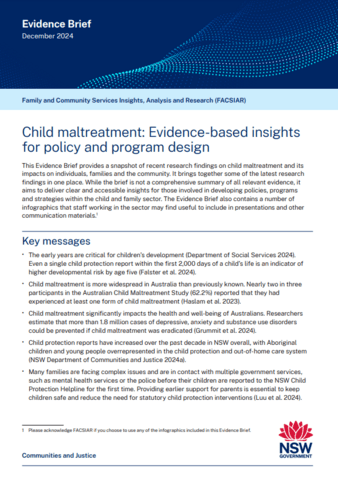
Briefing paper
Child maltreatment: evidence-based insights for policy and program design
This Evidence Brief provides a snapshot of recent research findings on child maltreatment and its impacts on individuals, families and the community. While the brief is not a comprehensive summary of all relevant evidence, it aims to deliver clear and accessible insights for those involved in developing policies, programs and strategies within the child and...
Case study
Victoria State Government’s Early Intervention Investment Framework
The Victorian Government introduced the Early Intervention Investment Framework in 2021 with the aim to guide early intervention policy and budget proposals that focus to improve lives of inhabitants by linking government’s funding to quantifiable impacts. This case study gives an overview of the framework which provides a basis for trialling innovative early intervention initiatives.
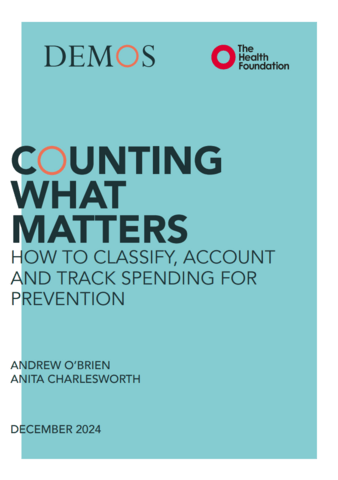
Report
Counting what matters: how to classify, account and track spending for prevention
This paper analyses the current constitutional and operational framework for a new classification of public expenditure. The aim is to identify expenditure and encourage the ‘shift to prevention’. It considers three expenditure areas in the United Kingdom: health, homelessness and children’s social care. By differentiating between everyday spending and preventative spending, the government could measure...
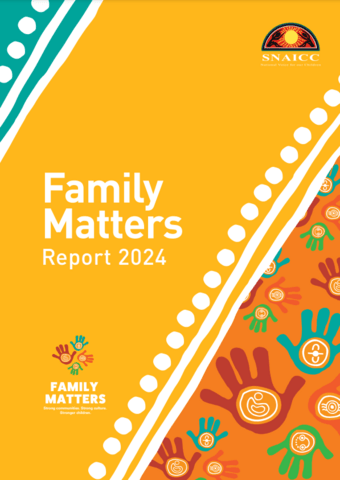
Report
Family Matters: report 2024
This report tracks progress towards ensuring Aboriginal and Torres Strait Islander children grow up safe, cared for and connected to their families, communities and culture. In particular, the report examines the over-representation and outcomes for Aboriginal and Torres Strait Islander children in child protection systems, finding Australia will fail to meet its 2031 Closing the...
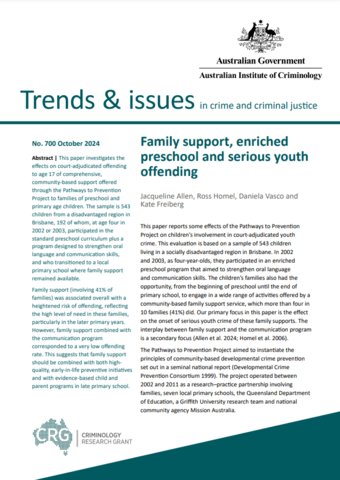
Briefing paper
Family support, enriched preschool and serious youth offending
This paper examines the effects of family support and an enriched preschool program on serious youth offending. It finds that family support alone was associated with a higher risk of offending, but that family support in combination with early intervention programs correlated with very low offending rates. The research suggests that the benefits of family...