

Child poverty
Alternative labels
Poor children
Report
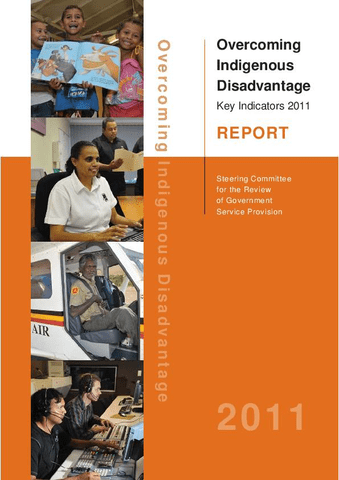
Overcoming indigenous disadvantage: key indicators 2011
In 2002, Australian governments collectively made a renewed commitment to overcoming the disadvantage experienced by many Indigenous Australians. As part of this commitment, governments agreed to a regular public report on progress — the Overcoming Indigenous Disadvantage: Key Indicators report. This is the fifth edition of that report. This report is more than a collection...
Report
The relationship between transport and disadvantage in Australia
This resource sheet provides information about how transport and disadvantage intersect and why some groups are especially vulnerable to transport disadvantage.
Report
Intergenerational disadvantage
For some time now work participation statistics in Australia have confronted us with the apparent prolongation of the disadvantages experienced by some parents in the lives of their offspring. Australian Bureau of Statistics (ABS, 1994) data has indicated that young people whose parents are not in work have lower labour force participation rates and higher...
Report
Is career advancement important to disadvantaged jobseekers?
For many jobseekers low-paid work is in itself not a good stepping stone towards a better job, so the policy focus has thus shifted from helping welfare recipients to obtain jobs, to supporting employment in quality jobs that offer opportunities for wage and career progression. This paper looks at career aspirations among Australians who have...
Report
Overcoming Indigenous disadvantage: key indicators 2009
Overcoming Indigenous Disadvantage 2009 is the fourth report in a series commissioned by heads of Australian governments in 2002, to provide regular reporting against key indicators of Indigenous disadvantage. In March this year, the terms of reference were updated in a letter from the Prime Minister. The new terms of reference reaffirm governments’ commitment to...