

Assistive technology
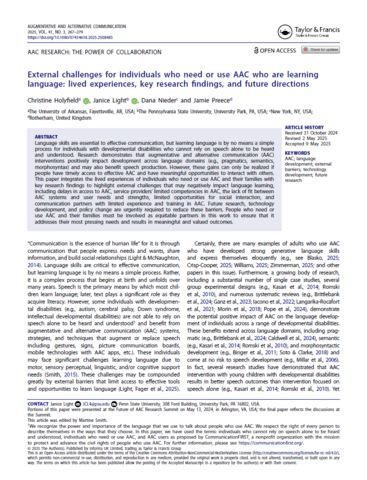
Journal article
External challenges for individuals who need or use AAC who are learning language: lived experiences, key research findings, and future directions
This article highlights the external barriers that may impact the language learning of people who need or use augmentative and alternative communication (AAC) including barriers related to AAC tools. It identifies opportunities and priorities for future research and technology development to reduce these barriers and better support language learning.
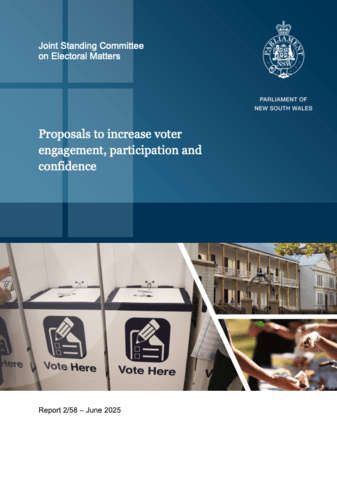
Report
Proposals to increase voter engagement, participation and confidence
A report from an inquiry into proposals to increase voter engagement, participation and confidence in New South Wales. It presents three findings and provides 22 recommendations. The recommendations cover a variety of matters ranging from civics education, voting information, technology-assisted voting and electoral funding laws.
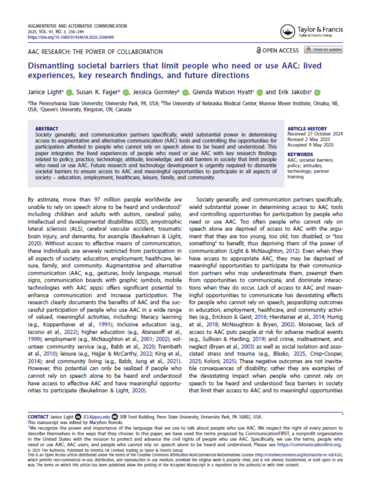
Journal article
Dismantling societal barriers that limit people who need or use AAC
This paper looks at the societal barriers that limit people who use or need augmentative and alternative communication (AAC) tools. Examples of ACC tools are gestures, body language, manual signs, communication boards with graphic symbols and mobile technologies. The conclusion of the paper calls for a fundamental shift in AAC research, technology and training.
Report
Autism supports for comfort, care and connection
The autistic-led project explores how autistic adults employ a range of objects, services and creatures to support their wellbeing. The study’s findings offer insights into the everyday and creative ways that autistic people understand, (re)imagine and engage with non-human support activities, practices and things.
Report
Scaling innovations: strategies that work
This report describes 24 innovative solutions with international scaling potential that improve the daily lives and legal rights of people with disabilities. It identifies eight strategies that support effective scaling, covering establishing a strong home country presence; effective licensing of products and services; using the resources of educational and arts institutions; and partnerships built on...