

 SHARE
SHARE
Dismantling societal barriers that limit people who need or use AAC
| Attachment | Size |
|---|---|
 Dismantling societal barriers that limit people who need or use AAC Dismantling societal barriers that limit people who need or use AAC
|
1.77 MB |
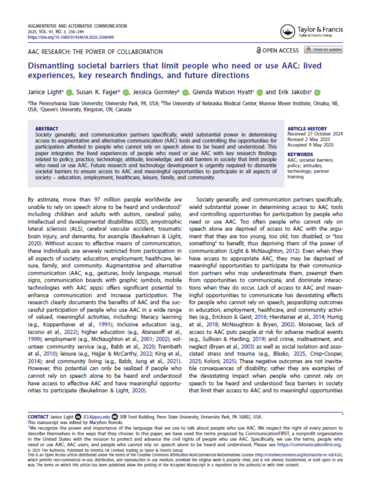
This paper looks at the societal barriers that limit people who use or need augmentative and alternative communication (AAC) tools. Examples of ACC tools are gestures, body language, manual signs, communication boards with graphic symbols and mobile technologies with AAC apps.
This paper integrates the lived experiences of people who need or use AAC with key research findings related to policy, practice, technology, attitudes, knowledge and skill barriers in society that limit people who need or use AAC. Future research and technology development is required to dismantle societal barriers to ensure access to AAC and meaningful opportunities to participate in all aspects of society including in education, employment, healthcare, leisure, family and community.
The conclusion of the paper calls for a fundamental shift in AAC research, technology and training. It emphasises that while past efforts have focused on individuals who use AAC, they have largely overlooked the deeper issue: societal barriers that restrict access and meaningful participation. The authors advocate for inclusive approaches that prioritise the voices and needs of AAC users and involving them as equal partners throughout the process.
