

Employer engagement (disability)
Alternative labels
Employer awareness (disability)
Employer confidence (disability)
Employer responsiveness (disability)
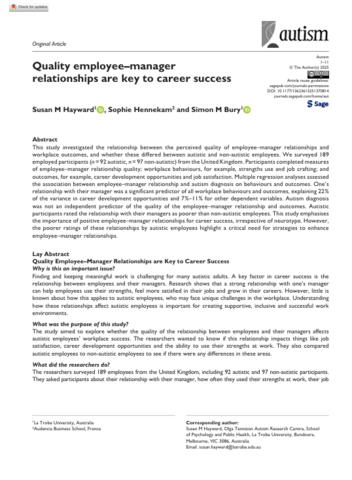
Journal article
Quality employee–manager relationships are key to career success
This study explores how the quality of employee-manager relationships influences workplace success, particularly for autistic employees. It examines whether strong relationships enhance job satisfaction, career development and the ability to use their strengths at work. They find that a strong employee-manager relationship consistently predicts workplace success for autistic employees.
Website
Guides for employers and employees
This webpage contains a guide for employers and a guide for employees with Multiple Sclerosis (MS). The guide for employers contains information about MS and employing people with MS. The guide for employees contains information about disclosing MS to an employer, management of symptoms at work and implications for career pathways.
Guide
NDS Aboriginal and Torres Strait Islander Employment Guide and Toolkit
The Aboriginal and Torres Strait Islander Employment Guide and Toolkit supports disability service organisations to improve workforce participation through culturally informed practice. It offers a two‑stage framework covering organisational readiness and practical employment strategies across recruitment, retention and progression. Grounded in self‑determination and partnership, it includes tools and templates to enable sustained, accountable action nationwide.
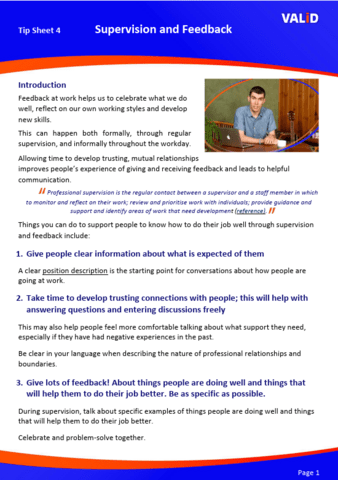
Guide
Supervision and feedback
This guide help employers support staff with intellectual disability through clear expectations, regular supervision and constructive feedback. It highlights the importance of building trust using both formal and informal feedback, inviting employee input, and discussing workplace adjustments to help people succeed at work.
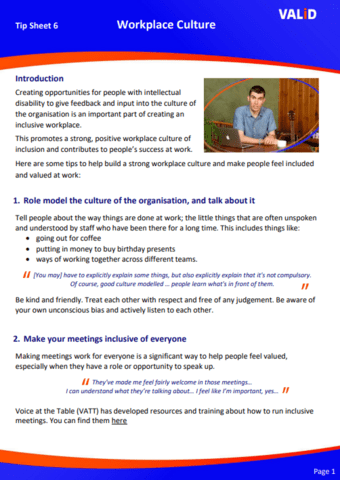
Guide
Workplace culture
This resource offers guidance on building an inclusive workplace culture where people with intellectual disability feel valued and supported. It includes tips on role modelling positive behaviour, running inclusive meetings, planning accessible social events, encouraging daily connections, and recognising everyone’s contributions.