

Digital platforms
Alternative labels
Web portals
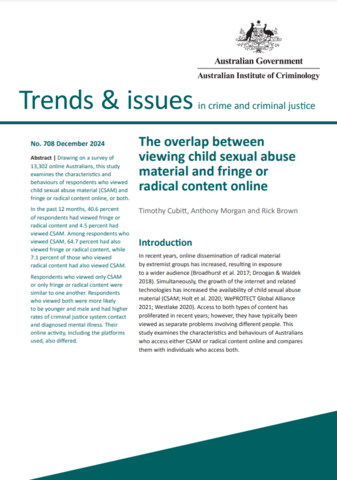
Briefing paper
The overlap between viewing child sexual abuse material and fringe or radical content online
This examination of the characteristics and behaviours of Australians who access either child sexual abuse material or radical content online finds that individuals who access both are a distinct group, demographically and behaviourally. The findings highlight the need for content moderation policies that consider the overlap between different types of harmful content and target both...
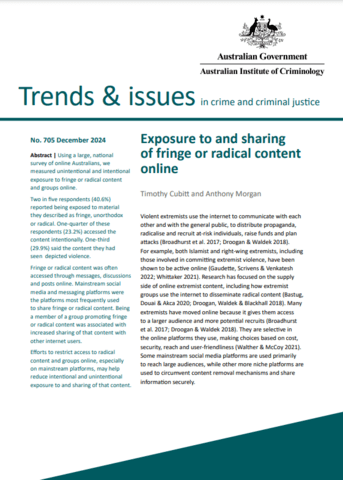
Briefing paper
Exposure to and sharing of fringe or radical content online
The research aimed to understand the prevalence of online exposure to fringe or radical content in Australia, the motivations behind accessing such content, and the platforms facilitating its spread. It finds a significant number of people are unintentionally exposed to this material, highlighting the importance of removing it from online platforms.
Report
Right wing extremist movements in Australia
This examination of right-wing extremists in Australia looks at the movements, motivations, and international links of local groups, particularly in online spaces. The report makes six recommendations focusing on social media platform regulation, law enforcement access to encrypted communications and the creation of a national hate crimes database.
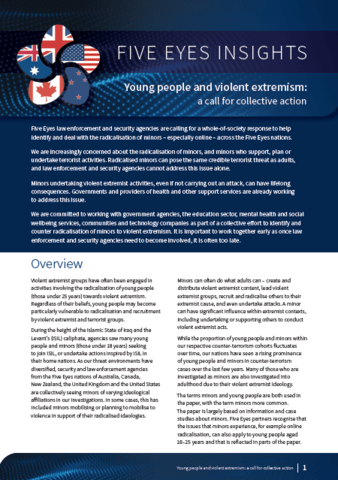
Briefing paper
Young people and violent extremism
A jointly authored analysis identifying common issues and trends contributing to youth radicalisation, including case studies from all of the Five Eyes countries. A whole-of-society response, including early intervention, is supported to counter the issue. The analysis informs the Australian Government’s upcoming counter-terrorism and violent extremism strategy.
Report
Digital platform services inquiry: interim report 9 - revisiting general search services
This report provides an updated analysis of the Australian search market following the emergence of generative AI. It finds that Google maintains its market dominance and reiterates previous recommendations for addressing potential consumer harms in the digital market.