

Briefing paper
 SHARE
SHARE
Exposure to and sharing of fringe or radical content online
Publisher
Internet
Digital platforms
Social media
Communications regulation
Internet governance
Radicalisation
Extremists
Australia

Description
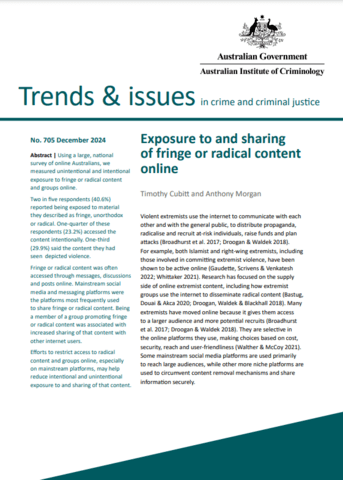
The research aimed to understand the prevalence of online exposure to fringe or radical content in Australia, the motivations behind accessing such content, and the platforms facilitating its spread. It finds a significant number of people are unintentionally exposed to this material, highlighting the importance of removing it from online platforms. The study explored the behaviours of 13,000 Australians who are online.
Key findings
- Two in five respondents (40.6%) reported being exposed to material they described as fringe, unorthodox or radical.
- One quarter of these respondents (23.2%) accessed the content intentionally.
- One third (29.9%) said the content they had seen depicted violence.
- One in eight respondents (12.7%) who had seen fringe or radical content said they had also shared it online.
- Mainstream social media and messaging platforms were the platforms most frequently used to share fringe or radical content.
- 1 in 10 said the main reason for intentionally accessing the content was that they had seen it promoted on social media.
- Unintentional viewers were more likely than respondents who had not seen such content to be younger, male, university educated and to spend more time online for personal or work purposes.
- Intentional viewers were more likely to be university educated and male however, they were also older and less likely to be employed.
Publication Details
DOI:
10.52922/ti77734
ISBN:
978 1 922877 73 4
Copyright:
Australian Institute of Criminology 2024
Access Rights Type:
open
Series:
Trends & issues in crime and criminal justice No. 705
Post date:
12 Dec 2024
