

Public servants
Alternative labels
Government employees
Public service employment
Literature review
Relational leadership: an approach to Public Service capability development
This review aims to provide a broad overview of contemporary leadership science informed by the Queensland public sector. This report is intended to be a summary of the available evidence on the themes that matter which can be used for the service to build and create a vision of leadership for the future. It recommends...

Guide
Policy handbook: a ‘real world’ guide to policy development
This handbook provides guidance to develop policy in a coherent and consistent manner across the Irish civil service. It sets out a framework and structured approach to support policy development built around two key features: the Three Pillar Framework and the five phase model that a typical policy would follow. Case studies illustrate phases in...
Report
Realities and challenges of implementing merit protection frameworks
This report explores the concept of merit in recruitment practices in a modern public sector context, drawing on interviews from three different jurisdictions in Australia and Aotearoa New Zealand. It outlines a set of key actions and details the latest thinking and practice for governments to consider in their respective recruitment and selection processes.

Survey Report
What women want
This report provides an overview of women's experiences in the workplace, particularly the Commonwealth public sector. Areas covered include women's hours of work, flexible working arrangements, job satisfaction, job security and career development.
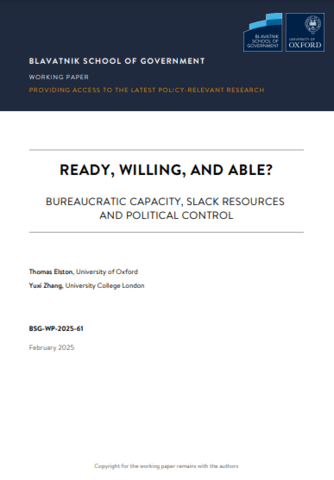
Working paper
Ready, willing and able? Bureaucratic capacity, slack resources and political control
Responding to changing political preferences is a democratic imperative. Better-resourced bureaucracies should be more able to comply with new political directions, irrespective of their willingness to do so. This paper examines how bureaucratic capacity affects responsiveness, finding that spare organisational capacity significantly increases the likelihood of bureaucracies consenting to program changes and more expeditious implementation.