

Aboriginal people (Australia)
Alternative labels
Aboriginal Australians

Collection
Standard
Curated from a broad selection of key Indigenous policy topics, the First Peoples & Public Policy Collection brings together diverse, policy-relevant practice resources and research information to support the development and implementation of better public policy.
Report
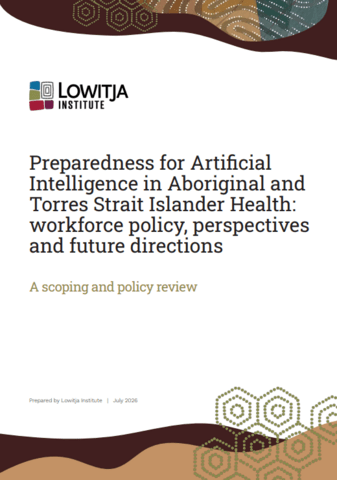
Preparedness for artificial intelligence in Aboriginal and Torres Strait Islander health: workforce policy, perspectives and future directions
For Aboriginal and Torres Strait Islander peoples, communities and organisations to realise the benefits of artificial intelligence (AI) technologies, while safeguarding against potential harms, leadership, perspectives and Indigenous Knowledge Systems need to be embedded throughout the AI lifecycle. This scoping and policy review builds on the work of Artificial intelligence for healthcare in Australian Indigenous...
Position paper
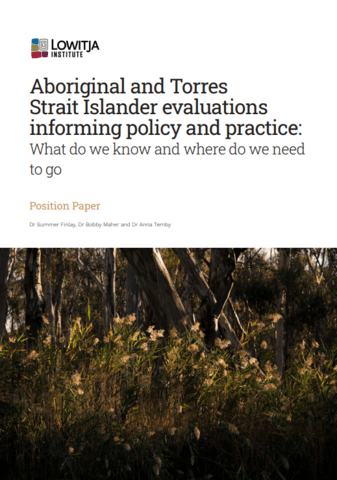
Aboriginal and Torres Strait Islander evaluations informing policy and practice
This position paper demonstrates that the evidence generated through the evaluation of Aboriginal and Torres Strait Islander programs is rarely used to inform genuine policy and practice shifts across Australia. The paper calls for a more intentional and accountable approach from policymakers, commissioning bodies and governments. It provides a series of recommendations.
Report
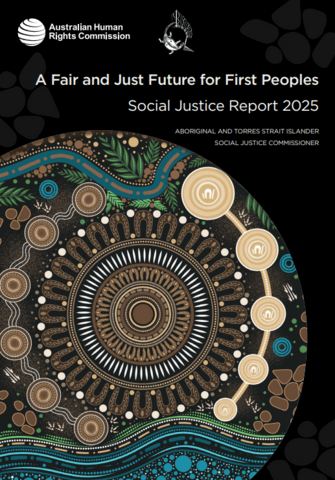
A fair and just future for First Peoples: social justice report 2025
This report considers the exercise and enjoyment of human rights by Aboriginal and Torres Strait Islander peoples, including progress, barriers impeding enjoyment, and approaches required to uphold and protect rights. The report reveals systemic inequality for First Peoples. It includes a Blueprint for a fair and just future for First Peoples and 25 recommendations.
Report
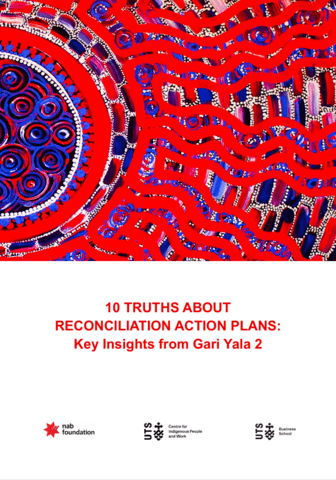
10 truths about reconciliation action plans
This report outlines findings from a survey comparing the workplace experiences of Aboriginal and Torres Strait Islander people across environments with and without Reconciliation Action Plans in place. Participants report more positive workplace experiences where Reconciliation Action Plans are in place.