

Behavioural insights
Report
Reality Now: tobacco and vaping report
This report presents findings on tobacco and vaping behaviours among Australian secondary school students. While actual use remains low, students overestimate how many of their peers engage in these behaviours, which can influence decision-making. Considerations from the findings for teachers, students and parents/carers are provided.
Working paper
Fixing the holes in economics: better theories for better growth
This paper examines the policy implications of areas where classical economic views have been overhauled in recent decades. It points to neglected policy levers for governments, with the potential to significantly boost economic growth and improve outcomes.
Report
Unlocking the full potential of behavioural insights for policy
This report examines the transformative role of behavioural insights (BI) in European Union policymaking, advocating for integrating BI early in the policy cycle to enhance policy effectiveness. The policy relevance of this work lies in its timely contribution to evidence-based approaches, particularly in areas where the human dimension is key to policy success.
Evaluation
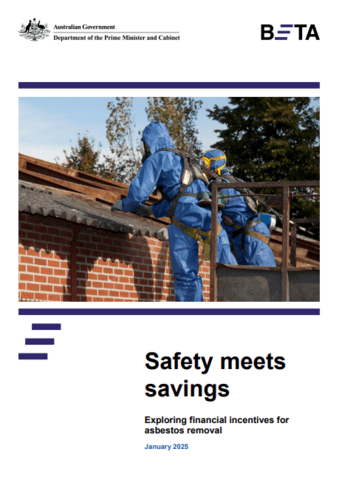
Safety meets savings: exploring financial incentives for asbestos removal
This report details the results of a randomised control trial to determine which financial incentives would encourage homeowners to proactively remove asbestos from their properties. The online study found that financial incentives could encourage asbestos removal if they cut immediate costs and provide additional benefits.
Report
EAST: four simple ways to apply behavioural insights
A simple guide for influencing behaviour in public policy. This resource helps policymakers apply behavioural insights effectively, emphasising the importance of context and tailored approaches to address diverse policy challenges.