

Electronic gambling machines
Alternative labels
Poker machines
Pokies
Electronic gaming machines
Briefing paper
Gambling Legislation Amendment (Pre-commitment and Carded Play) Bill 2024: bill brief
The Bill aims to reduce the negative impacts of electronic gaming machines (EGMs) through the introduction of mandatory pre-commitment and carded play, as well as slowing minimum spin rates to at least 3 seconds in order to address both player losses and potential money laundering activity. This brief details the events leading up to these...
Report
Roadmap for gaming reform
The report makes 30 recommendations to government concerning the implementation of cashless gaming in New South Wales, calling for the implementation of a mandatory statewide account-based gaming system by 2028. It proposes a phased implementation of reforms over 4-5 years with a focus on gambling harm minimisation and anti-money laundering measures.
Working paper
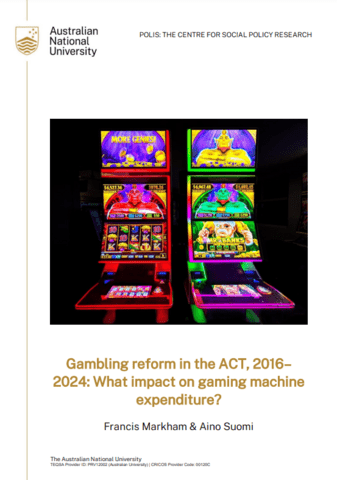
Gambling reform in the ACT, 2016–2024: what impact on gaming machine expenditure?
This paper outlines the reforms to electronic gaming machine (EGM) operations in the ACT between 2016 and 2024. It begins by detailing the two parliamentary agreements from 2016 and 2020, along with the reform agendas they introduced. The most significant reform during this period was a reduction in the number of EGMs.
Report
A better bet: how Australia should prevent gambling harm
Australia has the highest gambling losses in the world. This report argues Australia should ban gambling ads and introduce loss limits on pokies and online betting to stop the industry causing more harm. This report recommends a multi-pronged strategy to prevent gambling harm.
Journal article
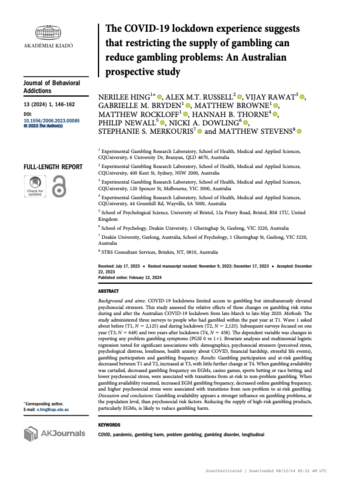
The COVID-19 lockdown experience suggests that restricting the supply of gambling can reduce gambling problems: an Australian prospective study
This article reports on a study that assessed people's gambling during and after the Australian COVID-19 lockdown. It found that gambling availability appears a stronger influence on gambling problems than psychosocial risk factors. Reducing the supply of high-risk gambling products is likely to reduce gambling harm.