

Government relations with First Peoples
Alternative labels
Aboriginal Australians government relations
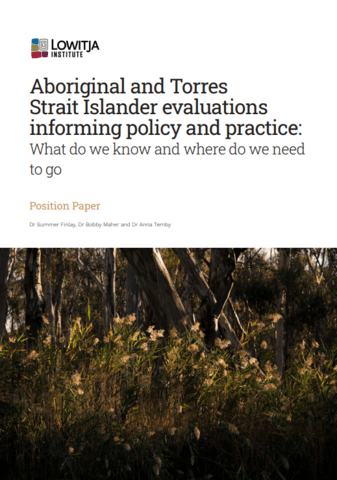
Position paper
Aboriginal and Torres Strait Islander evaluations informing policy and practice
This position paper demonstrates that the evidence generated through the evaluation of Aboriginal and Torres Strait Islander programs is rarely used to inform genuine policy and practice shifts across Australia. The paper calls for a more intentional and accountable approach from policymakers, commissioning bodies and governments. It provides a series of recommendations.
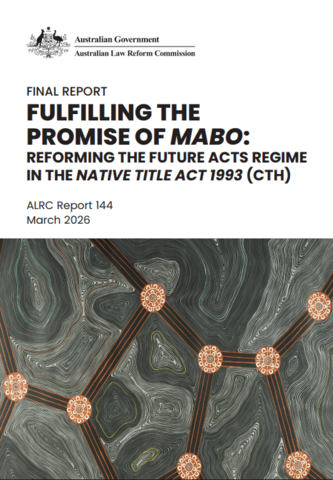
Report
Fulfilling the promise of Mabo: reforming the future acts regime in the Native Title Act 1993 (Cth)
This report follows an inquiry into the future acts regime in the Native Title Act 1993 (Cth), which governs how development activities can occur on native title land. It found that the future acts regime is not only unfair and inequitable but key aspects of it are also discriminatory. The report contains 86 recommendations.

Guide
Priority Reform Three: transforming government organisations
Priority Reform Three is about making all government institutions accountable for Closing the Gap, culturally safe, and responsive to the needs of Aboriginal and Torres Strait Islander people. This guide draws on case studies of good practice, provides practical advice to support public servants and highlights six examples of change underway across government.
Strategy
From sorry to action: a plan to act on Bringing them home (2026–2028)
The action plan sets out the policy gaps, priorities and steps needed to advance long-standing recommendations from the 1997 Bringing them home report over the coming two years. It highlights the ongoing needs of Stolen Generations survivors across health, wellbeing, records access, redress, sector sustainability, education and research, that remain unmet.
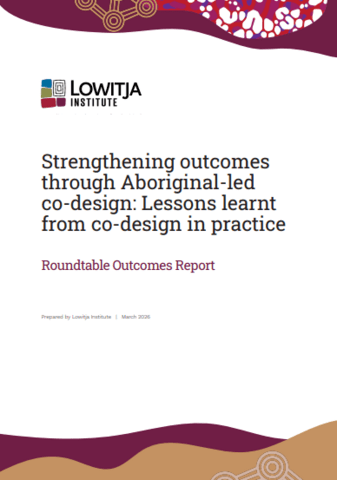
Report
Strengthening outcomes through Aboriginal-led co-design: lessons learnt from co-design in practice
The paper captures findings and recommendations from work on the future of co-design practice with Aboriginal and Torres Strait Islander peoples. It provides an update on consultations, as well as case studies that illustrate key approaches to authentic co-design. The paper presents a call to action for governments to ensure dramatic improvements in co-design practices.