

Labour mobility
Alternative labels
Mobile workforce
Briefing paper
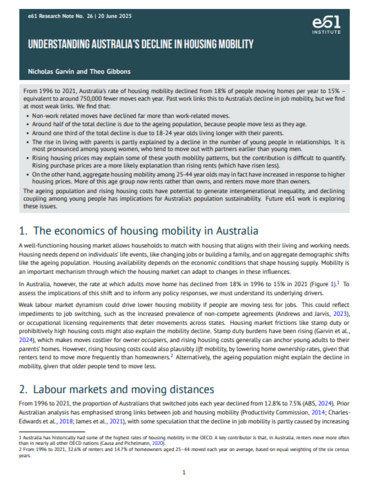
Understanding Australia's decline in housing mobility
From 1996 to 2021, Australia’s rate of housing mobility declined from 18% to 15%. This paper assesses the implications of this shift and outlines the underlying drivers. Past work links this to Australia’s decline in job mobility, but this paper finds at most weak links. The findings challenge a number of common narratives.

Report
Productivity before and after COVID-19
This paper examines the rapid rise, and subsequent rapid decline, in labour productivity over the COVID-19 pandemic. It finds Australia’s productivity performance during the pandemic presents no clear long-term implications. This further emphasises the need to address Australia’s long-run productivity problem.
Report
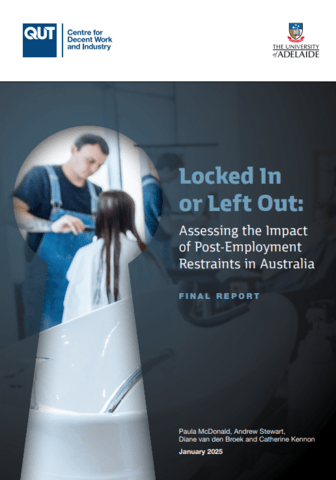
Locked in or left out: assessing the impact of post-employment restraints in Australia
Post-employment restraints – including non-compete clauses, non-solicitation agreements and non-disclosure clauses – aim to protect employers’ proprietary interests, client relationships and intellectual property. However, their broad application raises concerns about job mobility, wage growth and innovation. This report investigates the impacts of post-employment restraints on Australian workers and the motivations and experiences of small and...
Report
National Competition Policy: modelling proposed reforms
This report assesses the economic impact of 26 proposed reforms identified by the Australian, state and territory governments through the Council for Federal Financial Relations. It found a new round of National Competition Policy reforms could boost GDP by an estimated $26–45 billion in 2023-24 dollars.
Report
The lucky country or the lucky city? The location of economic opportunity in Australia
This report follows the trajectories of workers of different occupations, ages, and locations to better understand how wages and housing costs vary between the cities and regions. It also identifies the migration flows within Australia occurring in response to changing locations of opportunity finding overseas immigration has offset the worker exodus from the cities