

Electricity prices
Alternative labels
Power prices
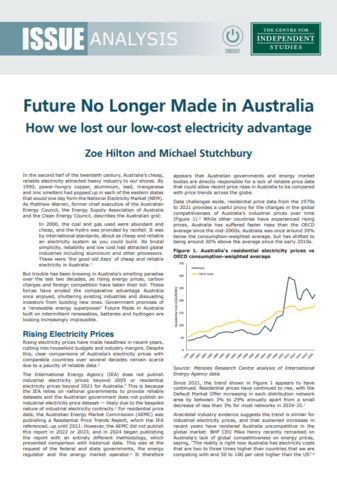
Briefing paper
Future no longer made in Australia: how we lost our low-cost electricity advantage
This paper traces how Australia offered some of the cheapest and most reliable electricity in the world from the 1960s through to the early 2000s. It warns that this historic advantage has now evaporated. The paper argues that intermittent wind and solar power has failed to replicate the low-cost reliability once supplied by coal and...
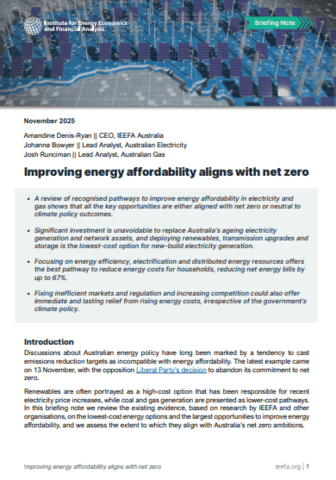
Briefing paper
Improving energy affordability aligns with net zero
This briefing note finds that all the major opportunities to improve energy affordability in electricity and gas also either support – or are independent to – Australia’s net zero ambitions. The findings dispel the notion that reducing emissions comes at the expense of Australian households and businesses. It finds significant room for improvement in energy...

Discussion paper
Delivering a high energy Australia
A blueprint for a high energy Australia finds that net zero is failing Australians and proposes guiding principles for an alternative path forward. The paper provides a set of policy recommendations representing a framework for restoring national strength through abundant, affordable energy, revitalising Australia’s industrial base and re-establishing an environmental ethic of stewardship rather than...
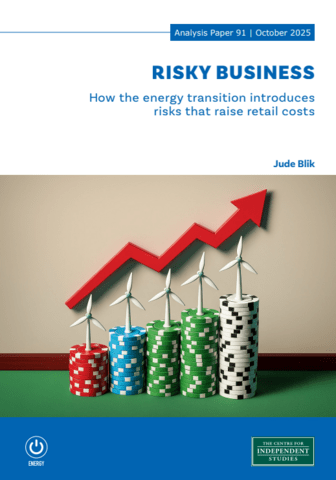
Report
Risky business: how the energy transition introduces risks that raise retail costs
The electricity system in Australia is adjusting to an increase in the overall amount of risk brought about by the increasing pace of the energy transition. This paper finds this will inevitably result in higher prices for everyday Australians. The mechanism through which this risk becomes cost is electricity retailing.

Report
Bills down, emissions down: a practical path to net-zero electricity
This report finds that Australian household energy bills are set to halve by 2050, leaving ‘policy room’ for the federal government to cut emissions in the electricity sector without hurting households. It recommends a three-pronged strategy to accelerate the push to net zero.