

Labour regulation
Report
Closing loopholes, opening opportunities: how Same Job, Same Pay is delivering for workers & communities
The Commonwealth Government’s Same Job, Same Pay laws have been driving significant wage gains across the Australian economy and creating long-term benefits worth billions, this report finds. Labour force data shows no negative employment effects from the changes. Instead, it shows rising employment, tight labour markets and increased job satisfaction.
Report
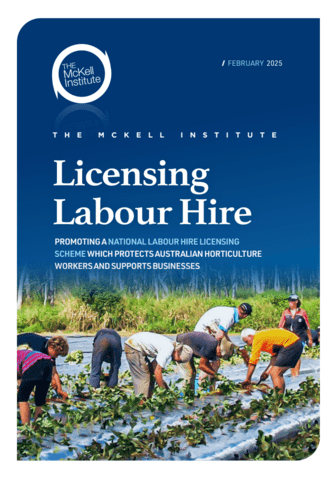
Licensing labour hire
This report details the need for a national labour hire licensing scheme, using horticulture as an example, to safeguard the rights and wellbeing of labour hire workers while also providing support for businesses. It recommends sustainable mechanisms to enforce labour hire licensing regulation in the horticulture industry and emphasises the importance of regulation consistency across...
Report
Unleashing the potential of our health workforce
This independent review has found virtually all the nation’s health professions face restrictions and barriers in working to their fullest – restrictions that are unrelated to their skills, training and experience. The review found that removing these barriers would make it easier for Australians to get high quality care, when and where they need it.
Discussion paper
Examining the macroeconomic costs of occupational entry regulations
Occupational entry regulations (OER) are legal requirements people need to meet to enter certain professions. They are intended to protect consumers by ensuring providers are of sufficient quality, but can also create costs by making it harder for new workers to enter a profession or for new firms to open and grow. This paper finds...
Report
Strings attached: how industry policy could strengthen labour standards through Australia’s renewable energy transition
This report finds the Australian Government should leverage its position as financier of renewable energy projects to guarantee strong labour standards in new energy and manufacturing jobs. It calls for labour standards to be embedded in Australia’s energy transition and industrial strategies, by attaching conditions to public financial support, and penalising non-compliance with these conditions.