

Charities

Report
Giving together: the power and potential of collective giving in Australia
This report provides a comprehensive snapshot of collective giving, or pooled funding, across Australia. The research shows that the impact of collective giving goes beyond the money and is a gateway to deeper and more sustained civic engagement. At the same time, the movement is progressing without the infrastructure and support it needs to fully flourish.
Report
Australian charities report: 12th edition
An annual analysis of the information received from Australian charities. It presents findings based on information from 53,641 Annual Information Statements submitted by charities for the 2024 reporting period. This edition outlines an overall analysis of data at a broad charity sector level, and a more detailed analysis of data focused on charity size.

Report
Artificial intelligence and Australian charities
The report examines the adoption and governance of artificial intelligence (AI) by Australian charities, finding the benefits for the sector come with particular risks. Although AI adoption in charities is driven by structural necessity, algorithmic decision-making could introduce new risks of accountability gaps and discrimination. The report identifies six principles for AI governance in charities.
Report
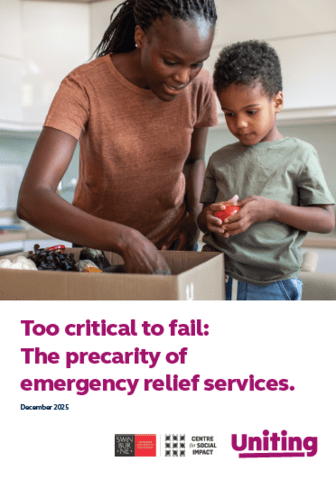
Too critical to fail: the precarity of emergency relief services
Despite being a critical service that provides immediate food relief and other essential items to those in acute need, emergency relief services are themselves experiencing precarity. To better understand this precarity of and the factors underpinning it, this research was conducted through a study into eight Uniting emergency relief services in Victoria and Tasmania.
Report
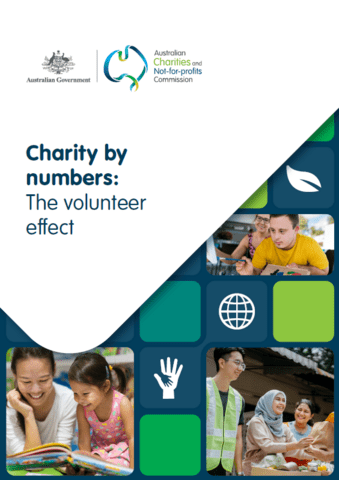
Charity by numbers: the volunteer effect
This report examines the role of charities operated solely by volunteers which comprise 43% of Australia’s sector. While mostly small, volunteer-run charities generated $4.3 billion and deliver services nationwide. The report finds volunteer numbers are increasing after years of decline though challenges remain, including limited government funding and regulatory pressures.