

Gender stereotypes
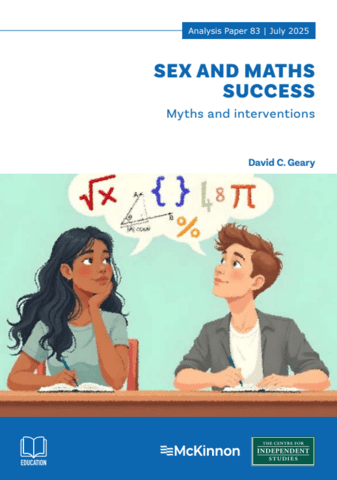
Report
Sex and maths success: myths and interventions
This report outlines sex differences in mathematics outcomes in primary and secondary school education. It looks into spatial competency, non-cognitive contributors and in-class attentive behaviour on these sex differences. The implications and interventions are examined, including Science, Technology, Engineering and Mathematics (STEM) policies for the future.
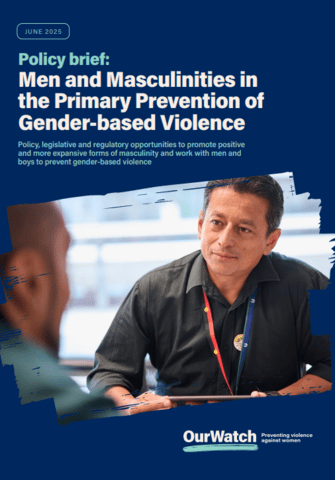
Policy report
Men and masculinities in the primary prevention of gender-based violence
Preventing gender-based violence requires requires work with men and boys, including challenging the stereotypes and cultures that underpin the drivers. This brief outlines policy, regulatory and legislative opportunities for promoting more positive and expansive forms of masculinity and working with men and boys to prevent gender-based violence.
Briefing paper
Perspectives on prevention of gender-based violence: Identifying and disrupting pathways to violence
This paper focuses on how governments can support a greater understanding of perpetration and a strengthening and acceleration of current efforts to end men’s violence against women and children. It affirms the need to build on Australia’s current approaches to prevention and considers whether they need to be further adapted or refined.
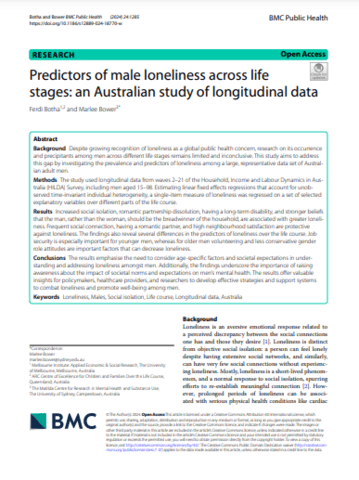
Journal article
Predictors of male loneliness across life stages: an Australian study of longitudinal data
Despite growing recognition of loneliness as a global public health concern, research on its occurrence and precipitants among men across different life stages remains limited and inconclusive. This study aims to address this gap by investigating the prevalence and predictors of loneliness among a large, representative data set of Australian adult men. The results offer...
Infographic
2024 Status of women report card
This is the second annual Status of women report card. It includes the most recent available data on the social and economic equality issues facing women and girls in Australia, and highlights key data on gender attitudes and stereotypes, gender-based violence, unpaid and paid care, economic equality and security, health, and leadership, representation and decision-making.