

Law reform
Alternative labels
Legal reform
Description
Law reform or legal reform is the process of examining existing laws, and advocating and implementing change in a legal system, usually with the aim of enhancing justice or efficiency. [Wikipedia]
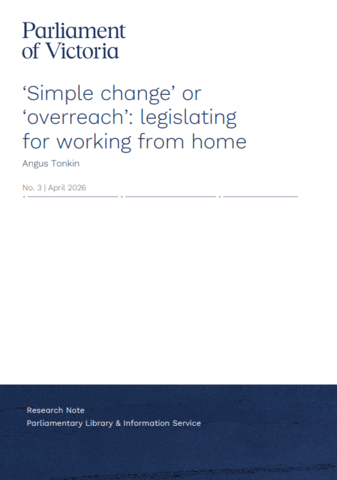
Report
‘Simple change’ or ‘overreach’: legislating for working from home
The concept of working from home (WFH) has been around for many years, but the onset of the COVID-19 pandemic in 2020 forced a dramatic change in workplaces. This paper examines the concept of WFH, its recent rapid uptake and key issues surrounding the Victorian government’s proposal to legislate a right to WFH in 2026.
Report
Rewarding Australian whistleblowers: design options for whistleblower incentive programs
This report seeks to analyse the viability of introducing a federal whistleblower reward scheme in Australia. It outlines options for establishing a distinctly Australian whistleblower rewards scheme, drawing on international examples. The report considers the benefits of a scheme, the two main reward scheme models and areas of focus for policymaking.
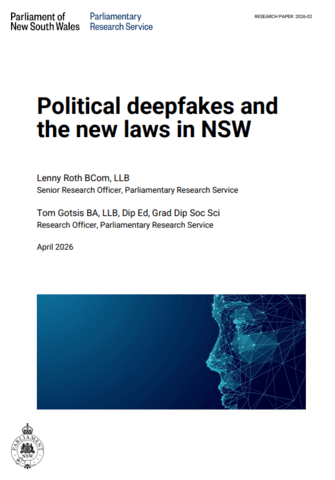
Report
Political deepfakes and the new laws in NSW
Political deepfakes are AI-generated digital content that depict a politician doing or saying something they did not do or say. This paper outlines the potential adverse impacts of political deepfakes, summarises New South Wales reforms, and examines legislative developments in other jurisdictions. It also discusses other measures that can be used to combat political deepfakes.
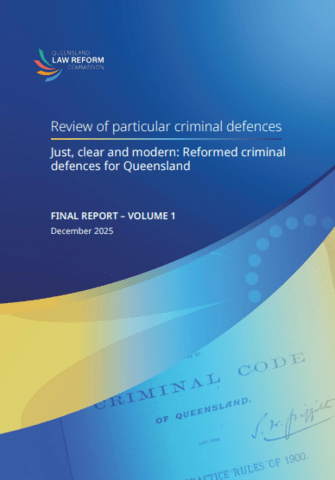
Report
Just, clear and modern: reformed criminal defences for Queensland
A final report on the review of criminal defences in the Criminal Code in Queensland. It examined self-defence, provocation to assault, killing on provocation, killing for preservation in an abusive domestic relationship and domestic discipline. It also considered reforms to practices or procedures relating to those defences or excuses. The report makes 36 recommendations.
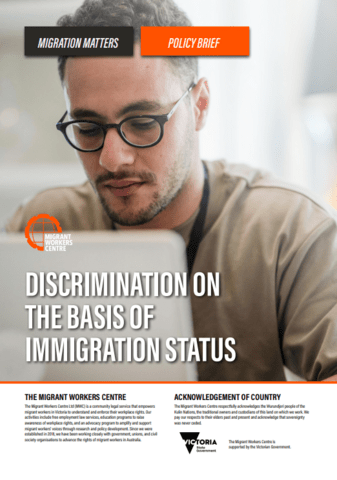
Briefing paper
Discrimination on the basis of immigration status
Immigration status is not recognised as a protected attribute under federal or state anti-discrimination law, with the Australian Capital Territory being the sole exception. Research shows that discrimination on the basis of immigration status is widespread. This brief analyses gaps in the current legal framework and sets out recommendations for reform.