

Youth services
Alternative labels
Youth work
Report
MCM’s Victorian youth homelessness snapshot 2025
The snapshot represents, on a given day in 2025, the reality faced by young people accessing MCM’s homelessness programs in Victoria, Australia. The data confirms that young people experiencing homelessness are navigating a system that is fragmented and reactive, not proactive or preventive. It confirms the urgent and growing need for early intervention, housing and...
Report
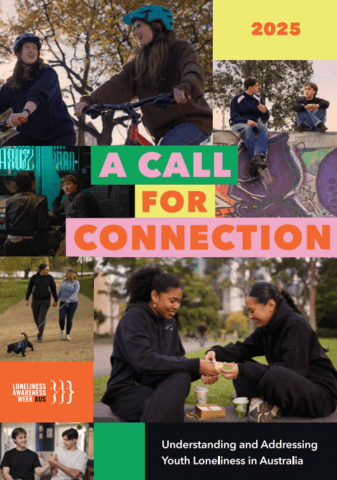
A call for connection
Loneliness in young people has emerged as a growing public health concern. Drawing from data from young Australians, this report establishes that loneliness is not just an individual problem but reflects gaps in social, economic, health and educational systems. It calls on policymakers to elevate loneliness as a national priority and provides actionable evidence and...

Evaluation
The power of peer work: an evaluation of ReachOut's PeerChat service
ReachOut PeerChat is an online, peer-led chat service designed to support young people who are facing mental health concerns and everyday challenges. The evaluation demonstrates that the service is achieving significant positive outcomes and highlights the unique and important role of peer work in mental health.
Report
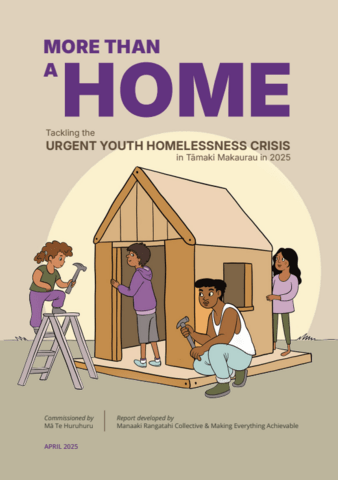
More than a home: tackling the urgent youth homelessness crisis in Tāmaki Makaurau in 2025
This report is a call to action that confronts the youth homelessness crisis in Tāmaki Makaurau (Auckland, New Zealand). It centres the voices, dreams and lived experiences of young people facing homelessness. The report urges policymakers to create systemic change that ensures taitamariki (young people) are not just sheltered, but truly supported to belong and...
Journal article
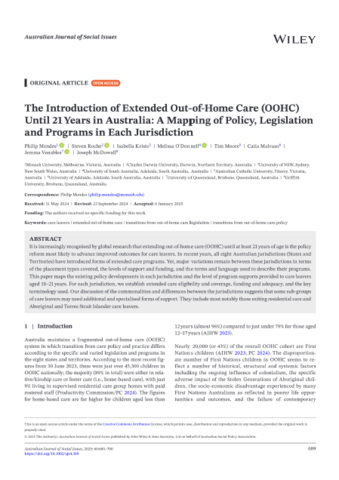
The introduction of extended out-of-home care (OOHC) until 21 years in Australia: a mapping of policy, legislation and programs in each jurisdiction
In recent years, all eight Australian states and territories have introduced forms of extended out-of-home care programs. Yet, major variations remain between these jurisdictions. This paper maps the existing policy developments in each jurisdiction and the level of program supports provided to care leavers aged 18 to 21 years.