

 SHARE
SHARE
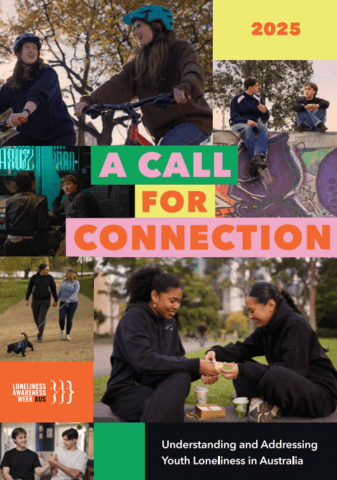
A call for connection

This report identifies youth loneliness as a significant public health concern requiring systemic responses. Drawing from data from young Australians, the report establishes that loneliness is not just an individual problem but reflects gaps in social, economic, health and educational systems. Therefore, it calls for strategic policy interventions to address these structural contributors.
First, the report outlines how factors such as financial insecurity, poor mental and physical health, and lack of community cohesion increases the likelihood of persistent loneliness (i.e. loneliness reported in two consecutive years). These are areas where government policy plays a crucial role such as income support, access to healthcare, education, and community activities and infrastructure.
Second, the report highlights vulnerable youth populations including LGBTIQA+ youth, and those in regional or remote areas. Effective policy must ensure that programs designed to reduce loneliness are inclusive, culturally safe and accessible across geographical and social divides.
The report calls on policymakers to elevate loneliness as a national priority. It urges investment in evidence-based programs, inclusive spaces and cross-sector collaboration including education, health, community services and workplaces. The report provides actionable evidence and recommendations to prevent long-term emotional, social and economic harm to Australia’s youth population. Addressing loneliness through policy is both a health and social imperative.
