

Rural and remote communities

Discussion paper
Abortion access in South Australia
This report analysed publicly available data from South Australia and found that 18% of the population who might need abortion care live in country areas but under 3% of abortions are coordinated in country-based health services. The report recommends changes to improve access to abortion care in country South Australia.
Evaluation
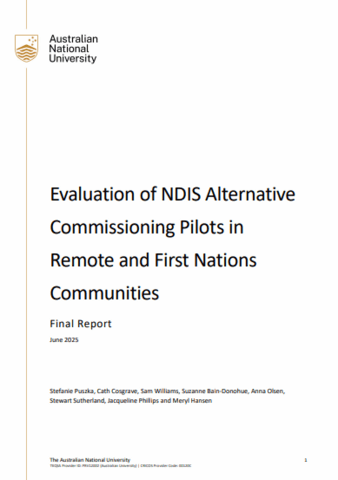
Evaluation of NDIS Alternative Commissioning Pilots in remote and First Nations communities
The aim of the NDIS Alternative Commissioning Pilots in remote and First Nations communities was to co-design, implement and evaluate place-based, community-driven alternative commissioning models in partnership with communities. This report contains the findings of the evaluation to support the future development and scaling up of alternative commissioning. It makes 10 overall recommendations.
Report
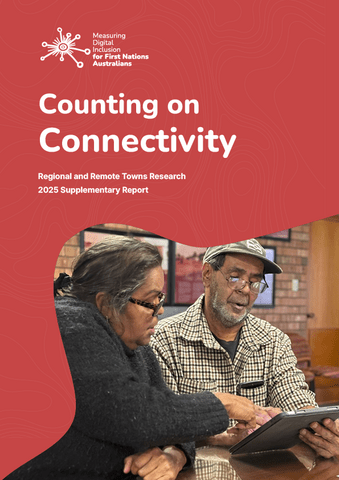
Counting on connectivity: regional and remote towns research
This report presents findings from 729 surveys of digital inclusion, communications and media use among First Nations Australians in ten regional towns. It highlights barriers to digital access in rural and remote areas and provides site-specific profiles alongside aggregated analysis. Produced for Closing the Gap Target 17, it contributes to ongoing efforts to measure and...

Journal article
Designing mentorship for constrained systems
Mentorship is widely recognised as a valuable strategy for supporting health professionals. This article examines how mentorship can be designed for constrained health systems, including in rural and remote settings. It proposes a systems-oriented perspective that positions mentorship as part of routine practice rather than as a separate professional development activity.
Report
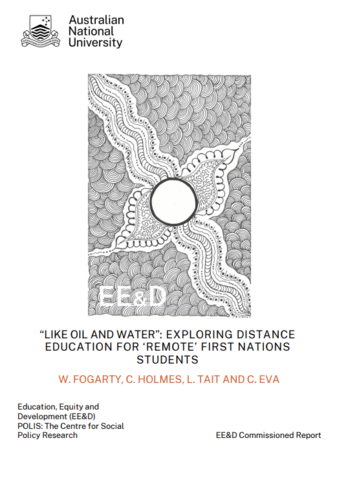
“Like oil and water”: exploring distance education for First Nations students
This interjurisdictional report critically examines the provision of distance education for First Nations students in ‘remote’ Australia, highlighting systemic barriers, cultural mismatches and opportunities for reform. It reveals how distance education models, founded in settler-colonial pedagogies and reliant on digital infrastructure, often fail to meet First Nations learners’ needs.