

Decarbonisation
Working paper
Achieving the transition to net zero in Australia
Australia has committed to achieving net zero greenhouse gas emissions by 2050 and more recently outlined a more ambitious intermediate target for emission reductions by 2030. The author of this paper asserts that significant reforms are required for Australia to meet its emission reduction goals, support the reallocation of workers, and adapt to climate change.
Report
Climate change and productivity: exploring the links
This paper finds that the discussion on climate change and productivity urgently needs broadening. While much of the debate on productivity and climate change has focused on the economic dimensions of productivity, notably labour productivity growth, improving productivity in the use of materials and natural capital is crucial to achieving net zero and requires much...
Report
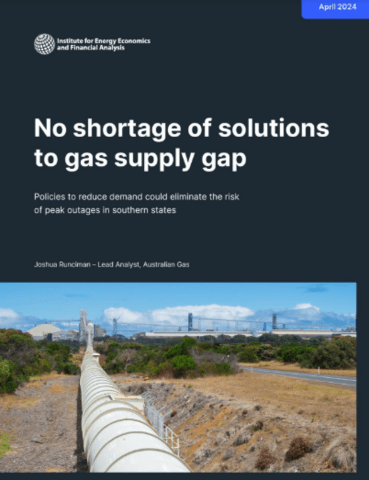
No shortage of solutions to gas supply gap
The east coast of Australia faces the prospect of excess gas demand in coming years due to declining gas production, with the imminent possibility of short-lived periods of excess demand in Victoria on peak demand days. However, this analysis shows that cost-effective and targeted interventions to lower gas demand could fully eradicate anticipated peak day...

Discussion paper
Targets, pathways and progress: 2024 issues paper
Later this year, the Climate Change Authority will provide a series of reports to the Australian Government on Australia’s emissions reduction targets and the transition to a net zero economy. This issues paper presents the Authority's approach, direction, and latest thinking on their work for public consideration and feedback.
Report
The new mobility era: leveraging digital technologies for more equitable, efficient and effective public transportation
This report explores how digital technologies have the potential to enhance urban mobility to achieve a variety of benefits. That includes increased access to public transit for those who are underserved, helping transit users optimise routes and combine various modes of transportation, and improving public transportation systems through increasing electrification.