

Energy consumption
Alternative labels
Domestic energy use
Report
Energy security is national security: a framework for better energy outcomes in Australia
This paper is intended to reframe the foundations of energy policy in Australia, to stimulate debate, and to guide future research (including, but not only, that under-taken by the IPA). It describes the nature and importance of energy security, and explains why it must be the pre-eminent consideration for energy and related policies
Report
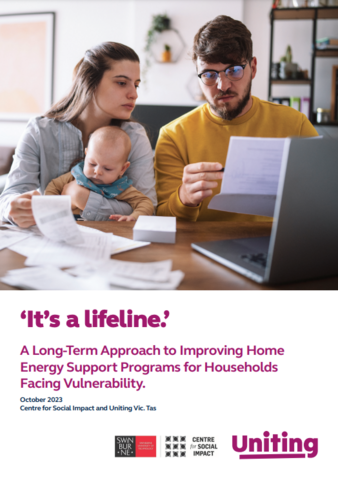
‘It’s a lifeline’: A long-term approach to improving home energy support programs for households facing vulnerability
Energy Efficiency Services, such as that offered by Uniting Vic.Tas, work with individuals and families on low-incomes and those experiencing energy hardship. This research project sought to understand the benefits and gaps of the Uniting Energy Support Service to determine ‘what works’ and what actions are needed to address the drivers and effects of energy...

Strategy
SEC Strategic plan 2023-2035
Victoria has set some of the most ambitious renewable energy, emissions reduction and storage targets in the country. This strategy document outlines the Victorian government's plans to invest in renewable energy generation and storage, support households to go all-electric, and help build the renewables workforce needed to drive the Victoria's energy transition.
Report
Switching on: benefits of household electrification in Australia
This report draws together existing research and literature to showcase the benefits and challenges of residential electrification. The report focuses on the financial, health and energy benefits of household electrification, job opportunities, and residential electrification policies currently in place or planned around Australia.

Report
Cutting the bills: UK households profit from clean power
In this report, the authors evaluate two possible futures for the UK power system, showing that keeping renewables deployment on track brings both cost of living and energy security benefits. The study uses Ember’s open power system model, with all input data publicly available.