

Communication disability
Alternative labels
Speech and language disorders
Communication impairment
Complex communication needs
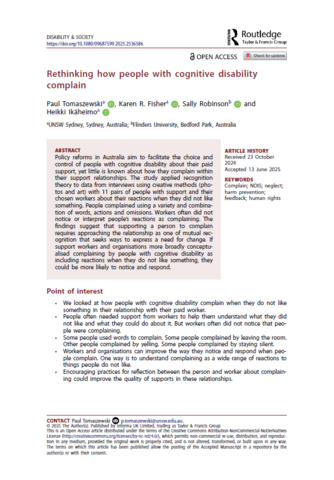
Journal article
Rethinking how people with cognitive disability complain
People with cognitive disability express dissatisfaction in varied ways, often missed by support workers. This study shows complaints can be verbal, behavioural or silent, and effective support relies on mutual recognition and broader understandings of “complaining.” Improving awareness and responses is essential, and further research is needed to understand what helps or hinders people and...
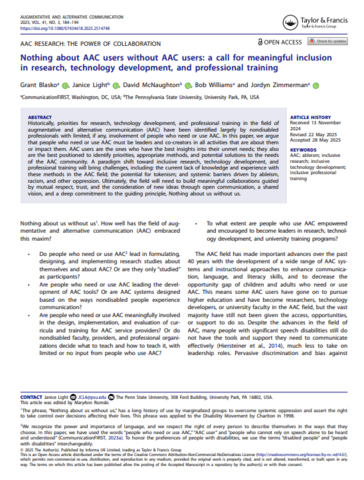
Journal article
Nothing about AAC users without AAC users
This article argues for the meaningful inclusion of people who use Augmentative and Alternative Communication (AAC). It advocates for AAC users to be leaders and co-creators in research, technology development and professional training because they have the best insights into their needs and potential solutions.
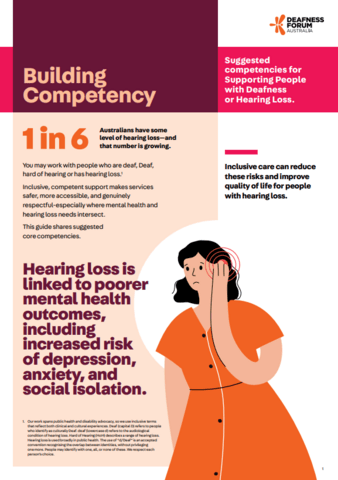
Guide
Building competency: suggested competencies for supporting people with deafness or hearing loss
A practical guide designed to help professionals provide more inclusive, respectful, and effective support to people who are Deaf, deaf, hard of hearing or have hearing loss. The guide outlines core competencies based on lived experience, including understanding the emotional impacts of hearing loss, communicating clearly, respecting individual communication preferences, and using trauma-informed, culturally aware...
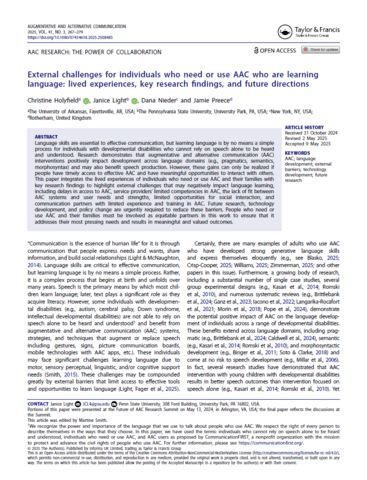
Journal article
External challenges for individuals who need or use AAC who are learning language: lived experiences, key research findings, and future directions
This article highlights the external barriers that may impact the language learning of people who need or use augmentative and alternative communication (AAC) including barriers related to AAC tools. It identifies opportunities and priorities for future research and technology development to reduce these barriers and better support language learning.

Guide
Everyday communication: tips for supporting people with deafness or hearing loss
A practical, easy-to-follow guide designed to help Australians communicate more inclusively with people who are Deaf, deaf, hard of hearing, or have hearing loss. This tip sheet offers straightforward, real-world advice such as facing the person, reducing background noise, speaking clearly (not loudly), and asking individuals how they prefer to communicate.