

Lived experience
Alternative labels
Living experience
Description
Lived experience refers to a representation of the experiences and choices of a given person, and the knowledge that they gain from these experiences and choices. [Wikipedia]
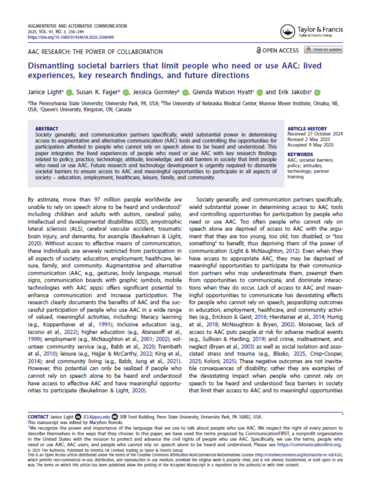
Journal article
Dismantling societal barriers that limit people who need or use AAC
This paper looks at the societal barriers that limit people who use or need augmentative and alternative communication (AAC) tools. Examples of ACC tools are gestures, body language, manual signs, communication boards with graphic symbols and mobile technologies. The conclusion of the paper calls for a fundamental shift in AAC research, technology and training.
Report
Growing intellectual disability employment in NSW government
People with intellectual disability are underrepresented in employment across all sectors, including the public service. This project examined how the NSW government might increase employment of people with intellectual disability. This report identifies evidence-based strategies to address the barriers identified and recommends two approaches to explicitly create employment pathways.

Case study
Case studies: Intellectual Disability Health Capability Framework education resources
This educational resource provides written case studies and discussion questions that highlight each of the six areas of the Intellectual Disability Health Capability Framework: intellectual disability awareness; communication; quality evidence-informed health care; coordination and collaboration; decision-making and consent; and responsible, safe and ethical practice.
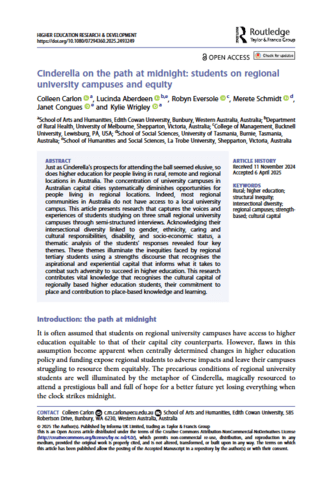
Journal article
Cinderella on the path at midnight: students on regional university campuses and equity
The concentration of university campuses in Australian capital cities systematically diminishes opportunities for people living in regional locations. This article presents research that captures the voices and experiences of students studying on three small regional university campuses from Victoria, Tasmania and Western Australia. It calls for higher education policies to include regional student voices.

Guide
LGBTQ+ sport integrity guideline
This guide provides sporting organisations and decision makers with comprehensive guidance on identifying, managing and resolving incidents of homophobia, biphobia and transphobia in sport. It covers examples and indicators of phobic behaviours, the responsibilities of national organisations in addressing behaviours, and the importance of including people with lived experience in decision-making.