

Evidence-based policy
Alternative labels
Evidence-informed policy
Report
Evidence on what works in regulating health and social care
The Care Quality Commission (CQC) is the main regulator of health and social care quality in England. In 2023, it introduced several changes to its approach. Following several reviews critical of its approach, this report supports the development of CQC's future regulatory model. It sets out five key pieces of learning for CQC to consider.
Working paper
Unleashing the policy potential of rigorous impact evaluation and randomised trials
This report explores how governments can overcome barriers to deliver high-quality impact evaluations to contribute to policy development. It sets out the main evaluation methods available, ranging from randomised trials to quasi-experimental approaches, and highlights the conditions under which each can be applied.
Evaluation
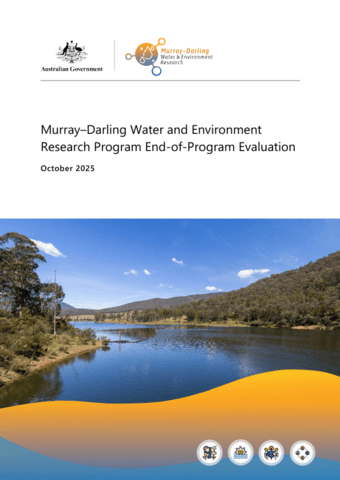
Murray-Darling Water and Environment Research Program end-of-program evaluation
This evaluation found the Murray–Darling Water and Environment Research Program delivered high‑value, policy‑relevant research that strengthened Basin management and supported water reform. It makes 7 recommendations, emphasising continued investment in research adoption, integration and long‑term funding to build an enduring research ecosystem and ensuring the Program’s full benefits are realised under future Basin challenges.
Report
Co-designing a Living Evidence Architecture
This report presents findings from the Living Evidence Architecture (LEA) project which set out to explore how living evidence systems can better support decision-making across diverse health contexts. The findings from the research paint a picture of living evidence as a catalyst for change technologically, politically and socially.

Report
How can research and initial teacher education institutions support research use?
How can research and initial teacher education institutions become active drivers of evidence-informed policy and practice? Drawing on data from the OECD’s 2023 Survey of Knowledge Mobilisation and international research, this paper offers considerations and examples on how to strengthen the role of research and initial teacher education institutions in knowledge mobilisation.