

Skilled workforce
Alternative labels
Skilled labour
21st Century work skills
Report
Learning that works: skills for today and tomorrow
In a modern and dynamic labour market, a focus on lifelong learning across Australia’s workforce is more important than ever. Work-related learning is a vitally important component of successful lifelong learning. This report is both a snapshot of where Australia is at and a roadmap for where it needs to go.
Report
Connecting for impact: aligning productivity, participation and skills
The report offers evidence-based insights into Australia’s evolving workforce. It explores how productivity and participation are shaped by shifting skill demands, technological change and structural barriers, identifying where better alignment between education, migration and workforce planning can deliver stronger, fairer outcomes. The report highlights five recommendations aimed at enhancing individual employment and skills outcomes.
Report
Victoria's future local government workforce
This insights report outlines recent trends, highlights key drivers of future need, and presents ideas and discussion around what is needed to develop a future-fit Victorian local government workforce. It delivers six recommendations for the Victorian local government sector to consider in meeting the challenges of the future with a fit-for-purpose workforce.
Discussion paper
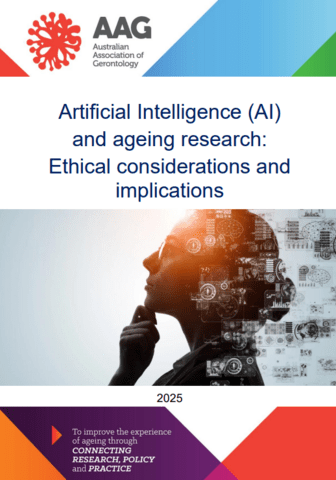
Artificial Intelligence (AI) and ageing research
Artificial Intelligence (AI) can accelerate knowledge in research, though viewed with caution by this paper. The paper provides an overview of risks, concerns and enablers. These identified issues support a cautionary approach to AI and ageing research to safeguard ethical research policy and practice that ultimately serves the health and wellbeing of vulnerable older Australians.
Report
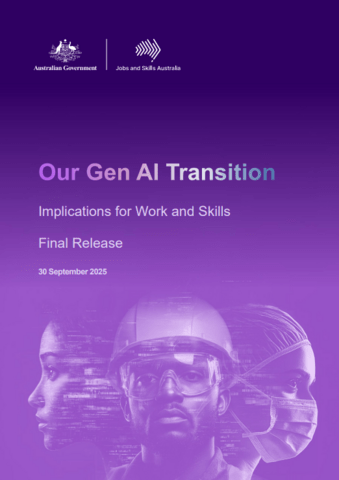
Our Gen AI transition: final release
This report includes a final analysis paper that explores how the implications of generative artificial intelligence (Gen AI) vary across the workforce, including exposure, experiences and perspectives, through cohort and intersectional lenses. The second part of the report provides the technical detail of how the key pieces of analysis were undertaken in the overarching report...