

Decision making
Report
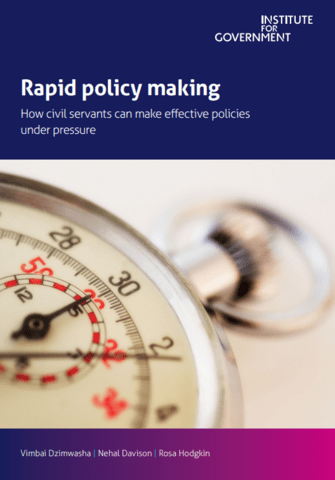
Rapid policy making: how civil servants can make effective policies under pressure
As ministers turn to civil servants for fast advice, it is vital to understand how to do it well. This report focuses on ‘urgent priorities’ that demand a fast response but fall outside the bounds of genuine crises or emergencies. It sets out how civil servants can be better supported to deliver robust advice at...
Report
Fairness in the Targeted Compliance Framework: when decisions are made beyond your control
An investigation into the remediation of income support cancellations and oversight of decisions made by employment service providers affecting job seekers in the Targeted Compliance Framework. This report found the Department of Employment and Workplace Relations’ oversight of decisions by providers is poor and lacking in transparency. It provides eight recommendations and identifies lessons for...
Report
Co-designing a Living Evidence Architecture
This report presents findings from the Living Evidence Architecture (LEA) project which set out to explore how living evidence systems can better support decision-making across diverse health contexts. The findings from the research paint a picture of living evidence as a catalyst for change technologically, politically and socially.
Guide
Creating structural change through shared decision-making: guidance for government and Aboriginal and Torres Strait Islander organisations
Drawing on real-world case studies and examples of effective shared decision-making, the guidance helps both governments and Aboriginal and Torres Strait Islander organisations learn from and scale proven approaches to shared decision-making. It includes readiness assessments, templates and step-by-step tools that guide both parties to work together in genuine, culturally safe and accountable ways.
Report
Empowered Communities Partnership joint decision-making: lessons learned review
The Empowered Communities (EC) Partnership is an Indigenous designed and led place-based reform partnership and aims to improve socioeconomic outcomes and close the disparity gap in two to three generations. This review finds EC shared decision-making is an effective model for empowering Indigenous people. The review’s findings and recommendations provide a case for change.