

United Kingdom
Report
Missing evidence: an inquiry into delayed publication of government-commissioned research
Last year Sense about Science asked Sir Stephen Sedley, a former judge in the Court of Appeal and a new trustee of Sense about Science, to undertake an inquiry into the scale and significance of non-publication of government-commissioned research. Sir Stephen found out that: The UK government spends around £2.5 billion a year on research...

Report
Tackling drug-resistant infections globally: final report and recommendations
Concerned about the rising levels of drug resistance whereby microbes evolve to become immune to a known drugs, the UK Prime Minister asked economist Jim O’Neill to analyse this global problem of antimicrobial resistance (AMR) and propose concrete actions to tackle it internationally. In July 2014, the UK Government commissioned the Review on Antimicrobial Resistance...
Guide
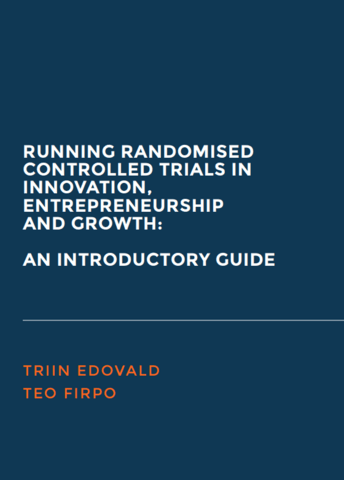
Running randomised controlled trials in innovation, entrepreneurship and growth
This guide introduces Randomised Controlled Trials (RCTs) for innovation, entrepreneurship and growth policies. It helps policymakers and practitioners understand, design, and manage RCTs without needing deep technical expertise. It offers practical advice, a clear framework, and links to further resources for testing and improving programmes and policies effectively.
Discussion paper
Using evidence: what works?
This discussion paper gives an introduction to, and discussion of, a project – The Science of Using Science – that reviewed the literature on effective strategies to increase the use of research evidence. The research was undertaken by the EPPI-Centre at UCL.
Blog post
Press regulation in an era of convergence
The regulation of the press in an era of media convergence is a thorny issue, which regulators around the world have tried to either grapple with or sweep under the carpet. The time has long passed when newspapers were just ‘news’ printed on ‘paper’. They are still that, but also now include news content published...