

Briefing paper
Briefing paper
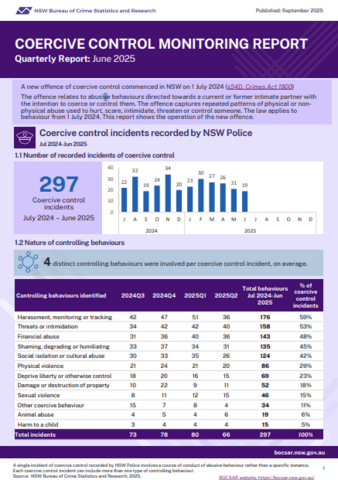
Coercive control monitoring report
Data on the first year of New South Wales (NSW) landmark coercive control legislation, which came into force on 1 July 2024. The legislation criminalises patterns of abusive behaviour in intimate partner relationships, marking a significant shift in how domestic abuse is recognised and addressed.
Briefing paper
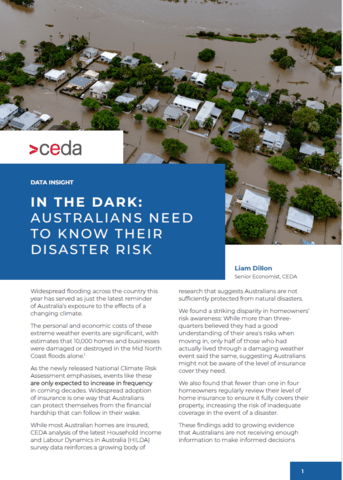
In the dark: Australians need to know their disaster risk
Australians face rising disaster risks from climate change but often lack clear information and adequate insurance. This report calls for better access to hazard data, consistent national disclosure, council support and public awareness to strengthen preparedness and resilience against future disasters.
Briefing paper
Measuring what really matters for Aboriginal and Torres Strait Islander peoples: racism and cultural safety in healthcare
This policy brief examines how systemic racism in Australian hospitals continues to affect the experiences and outcomes of Aboriginal and Torres Strait Islander patients, and outlines the evidence needed to drive reform. It highlights the need for a nationally coordinated approach led by Indigenous voices and backed by clear policy direction, consistent standards and comprehensive...
Briefing paper
Policy brief: gender gaps in paid and unpaid work persist
This policy brief summarises key findings on gender gaps in paid and unpaid work, from the OECD report Gender equality in a changing world, identifying relevant social, economic and institutional factors preventing gender equality. It closes with relevant policy options to reduce gender gaps in paid and unpaid work.
Briefing paper
Costs of climate-driven disasters and local government revenue
Climate change is making natural disasters more frequent and more intense, increasing costs for households, businesses and governments. This includes local governments, which are responsible for community infrastructure and facilities. This paper makes the point that the costs of climate change in Australia are increasing rapidly, while local government revenues are growing far more slowly.