

Briefing paper
Briefing paper
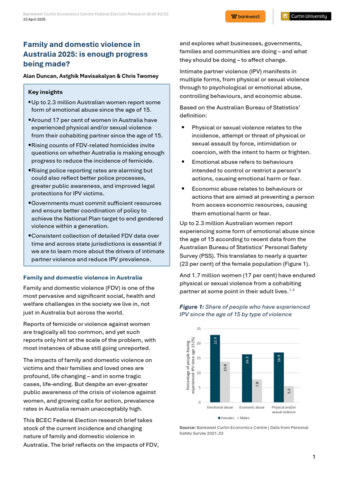
Family and domestic violence in Australia: is enough progress being made?
This briefing paper takes stock of the current incidence and changing nature of family and domestic violence (FDV) in Australia, reporting that FDV-related homicides and police reporting rates are rising. It reflects on the impacts of FDV and what can be done to promote change, including improved resourcing, better coordination of policy, and consistent data...
Briefing paper
Consultation with academics and civil society about the Children’s Online Privacy Code
This paper summarises insights from a workshop with academics and civil society experts, capturing key reflections and recommendations to inform the development of the Children’s Online Privacy Code. Prepared as a briefing for the Office of the Australian Privacy Commissioner, it distils collective expertise to support a rights-based approach to children’s digital privacy.
Briefing paper
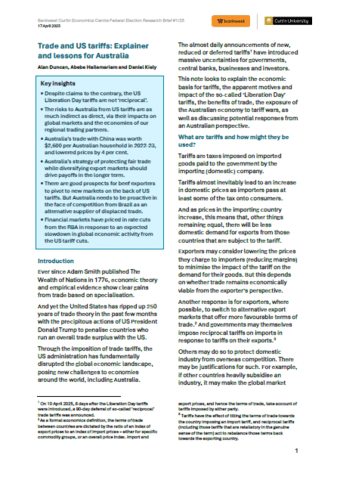
Trade and US Tariffs: explainer and lessons for Australia
This briefing note assesses trade and US tariffs, including an explanation and learnings for Australia. It seeks to explain the economic basis for tariffs, the apparent motives and impact of the so-called ‘Liberation Day’ tariffs, the benefits of trade, the exposure of the Australian economy to tariff wars, as well as discussing potential responses.

Briefing paper
Blueprint for a great childhood in South Australia
All children and young people growing up in South Australia have a right to enjoy a great childhood and it is our responsibility to do all that we can to deliver on their expectations. This guide takes the voices of South Australian children and young people expressing their needs and provides useful tips to meet...
Briefing paper
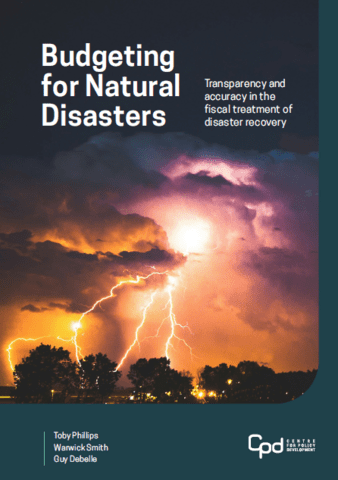
Budgeting for natural disasters
Natural disasters like bushfires, floods and cyclones aren’t rare or unpredictable. They’re inevitable and should be planned and budgeted for accordingly. But currently, the federal budget only includes disaster recovery spending for events that have already happened. This paper argues that estimated future disaster costs should be included in existing budget lines.