

Briefing paper
Briefing paper
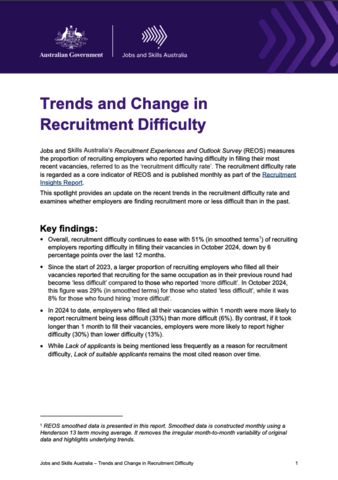
Trends and change in recruitment difficulty
This paper provides an update on the recent trends in the recruitment difficulty rate and examines whether employers are finding recruitment more or less difficult than in the past. It finds recruitment difficulty continues to ease after peaking in late 2022.
Briefing paper
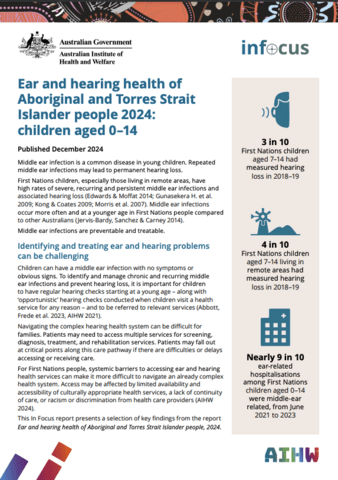
Ear and hearing health of Aboriginal and Torres Strait Islander people 2024: children aged 0–14
This paper presents information on the ear and hearing health of First Nations children aged 0–14 and shows the rate of preventable hearing loss among First Nations children is decreasing but still well above national averages.
Briefing paper
The argument for debate: how school debating can improve academic outcomes and foster a stronger democracy
Australian students’ decline in academic achievement has eroded public confidence, according to this paper, which positions debating skills as a possible solution. The paper provides examples from centuries of writing, arguing that debating can cement knowledge across subject areas, enhance language proficiency and encourage thoughtful, articulate and confident civic engagement.
Briefing paper
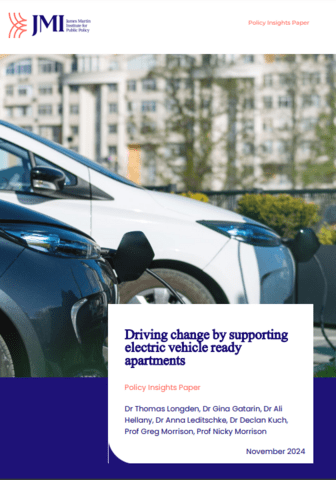
Driving change by supporting electric vehicle ready apartments
This paper highlights key strategies to expand electric vehicle (EV) charging infrastructure in apartment buildings across New South Wales. While EV adoption has surged in suburban homes, the report highlights unique challenges for apartment residents and offers practical solutions to improve accessibility in high-density housing.
Briefing paper
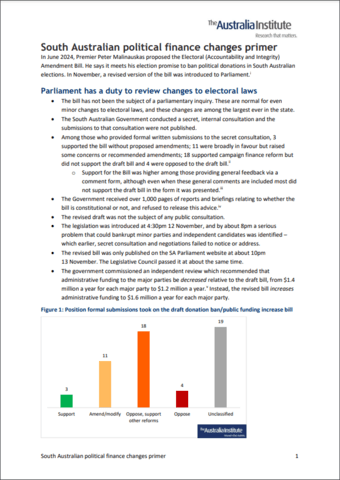
South Australian political finance changes primer
This primer responds to South Australia's proposed Electoral (Accountability and Integrity) Amendment Bill, concerning political donations and public funding of political parties. It argues that while the Bill claims to ban donations, it introduces several loopholes and ultimately increases public funding significantly, disproportionately benefiting major parties.