

Australia
Report
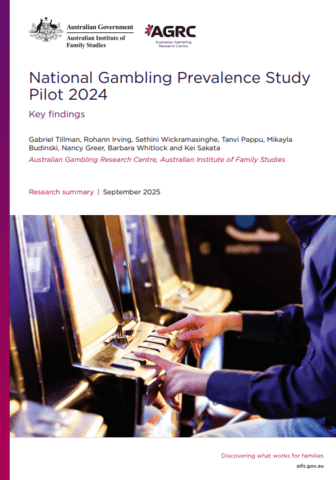
National Gambling Prevalence Study pilot 2024
This study reveals more Australians are being harmed by gambling amid rising participation. Any policy seeking to address gambling harm must consider links between riskier gambling and mental health, financial stress and intimate partner violence. Future policy should be underpinned by and evaluated from a routine national gambling prevalence study.
Discussion paper
The cost of slow growth in GST revenue
When introduced in 2000–01, revenue from Australia’s Goods and Services Tax (GST) was expected to grow in line with the overall Australian economy, providing a secure revenue source for state governments to fund services. This has not occurred. This paper shows that short-changing of the states is likely to get worse.

Report
Updated net zero pathways for Australia
The Net Zero Australia project models pathways to net zero and other futures. This report focuses on domestic decarbonisation. It models four scenarios for the domestic system: a reference scenario, current policies, net zero 2050 and net zero extended. Modelling results and implications are presented for energy production, storage and build; and energy use, emissions...
Guide
APS conflict of interest management framework: better practice model
Understanding how to identify and manage conflicts of interest is essential to maintaining public trust and upholding the integrity of the Australian Public Service. This framework provides clear guidance for agencies to develop or improve their conflict of interest policies. It outlines three levels of practice, so agencies can tailor their settings based on risks...
Report
Work health and safety across Australia’s regions
Work‑related injuries and illnesses can occur anywhere across Australia, in urban, regional or remote areas. This analysis uses national workers’ compensation claims data to provide new perspectives on the different incidence of injured or ill workers across these regions. It finds there are key differences across the regions.