

Australia
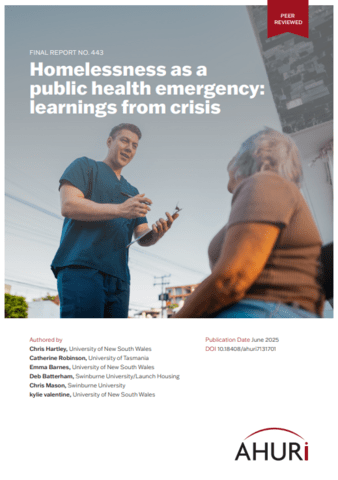
Report
Homelessness as a public health emergency: learnings from crisis
This research looks at public health responses to homelessness during the COVID emergency in Australia. It identifies barriers, adaptations and lessons learned from increased teamwork between public health and homelessness sectors. It investigates how these partnerships formed and how they can continue with ongoing adequate funding, staffing and logistical support.
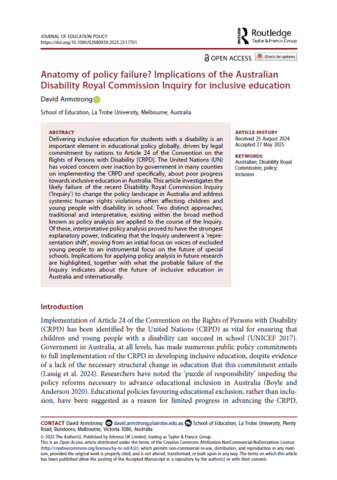
Journal article
Anatomy of policy failure? Implications of the Australian Disability Royal Commission Inquiry for inclusive education
This article contends that the Disability Royal Commission Inquiry into Violence, Abuse, Neglect and Exploitation of People with Disability is unlikely to reshape Australia’s education policy or address systemic human rights violations affecting children and young people with disability. Using policy analysis, it identifies a shift away from young people’s voices and raises broader concerns...
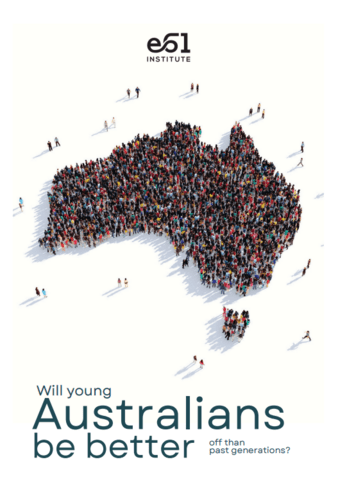
Briefing paper
Will young Australians be better off than past generations?
This report highlights how today’s young Australians differ from previous generations and explores what this means for their economic security, work opportunities, living arrangements, path to independence and overall wellbeing. For policymakers seeking to seeking to ensure that an intergenerational pattern of improvement continues, this report offers three implications.

Evaluation
Evaluation of co-design projects
An independent review of the National Disability Insurance Agency's (NDIA) co-design work. The evaluation aimed to better understand the NDIA’s co-design process, identify outcomes from co-design work and consider if the co-design approach was appropriate. It makes recommendations to improve NDIA's co-design processes.
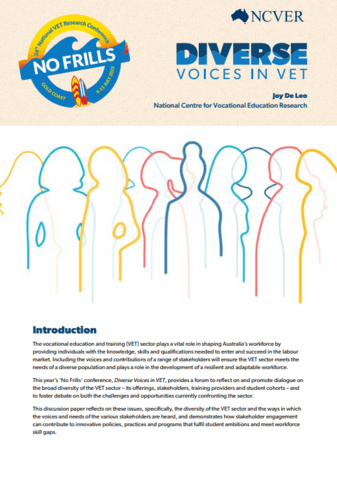
Discussion paper
Diverse voices in VET
This discussion paper focuses on the broad range of stakeholders in Australia’s vocational education and training (VET) sector, in particular the three key ones: industry, registered training providers, and VET students and apprentices. The paper discusses the needs and interests of each stakeholder, how these are met and some of the challenges faced.