

New South Wales
Report
Pseudolaw and sovereign citizens
This paper examines pseudolaw and its most prominent adherents, sovereign citizens. It outlines pseudolaw and its origins, sets out common arguments and beliefs, and explores factors for its spread in New South Wales and Australia. While the scale of the phenomenon is difficult to precisely identify, the paper discusses its impacts and ways to respond.
Strategy
Blueprint for a healthy Country and thriving regions
This blueprint outlines a model for landscape management in New South Wales (NSW). Comprised of seven components, the model places regional communities at the centre, rebuilds trust and offers them greater agency in their future. It provides a collaborative framework for people across NSW to work together to protect and restore ecosystems as a whole.

Guide
Closing the Gap toolkit for local government
The toolkit provides local councils in New South Wales with information, ideas and examples of what services and functions they provide that align with the aims and objectives of Closing the Gap. It offers practical examples, tools, templates and self-assessment tools for councils to measure how they align and where they can evolve.
Report
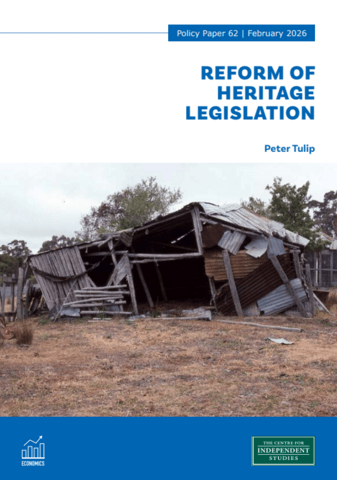
Reform of heritage legislation
Several states have recently overhauled their planning legislation. This paper discusses flaws in heritage legislation and how they might be rectified. It finds that heritage decisions fail to consider the costs of heritage protections. As a result, too many unremarkable buildings are preserved, restricting housing density and exacerbating the housing crisis.
Report
Foundational and disability supports available for children and young people in New South Wales
This interim report examines the supports available for children and young people with developmental delay or disability in New South Wales, the challenges associated with accessing these supports and the ways in which particular communities experience these challenges differently. The 15 findings and 17 recommendations emphasise investing earlier and supporting trusted, locally‑embedded services.