

Disinformation and misinformation
Alternative labels
Fake news
Description
Misinformation is incorrect or misleading information. It differs from disinformation, which is false information deliberately and often covertly spread (as by the planting of rumors) in order to influence public opinion or obscure the truth.
Report
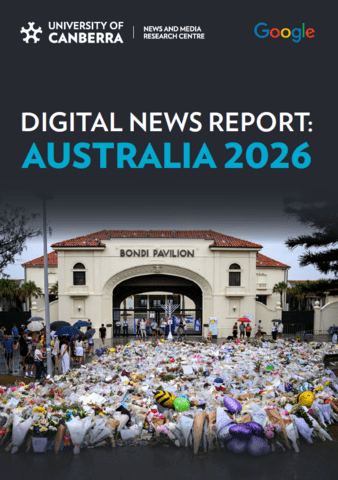
Digital news report: Australia 2026
This report shows how news consumption and trust in Australia are shaped by crises and politics. Interest has rebounded, especially among young people and women. Despite high avoidance, audiences rely on trusted sources over social media and artificial intelligence. Younger users favour relatable formats and creators, challenging news organisations to adapt to evolving habits and...
Report
Information resilience: understanding and protecting against misinformation
A series of reports examining how resilience to misinformation can be strengthened in Australia. The reports explore why people are susceptible to misinformation and how to build resilience at individual, community and societal levels. They found that misinformation poses a risk to Australia’s social cohesion, democratic resilience and decision making.
Report
Digital harms: consistency in definition, understanding and action
This paper examines the scale of digital harm, explains why current responses fall short and proposes reframing harm through a shared, multi‑sector, internationally relevant taxonomy. It argues such a framework is essential for effective reform and offers recommendations for governments, platforms, researchers and civil society to guide coordinated action and strengthen accountability across the digital...
Report
2025 Australian election advertising on social media
This report demonstrates that misleading information flourishes in online election advertising and lacks transparency and accountability. Misinformation, scare tactics and messages exploiting cost of living pressures of ‘every day’ struggling Australians is central to both online and other election ads. The report proposes five recommendations to strengthen transparency and improve election advertising online.
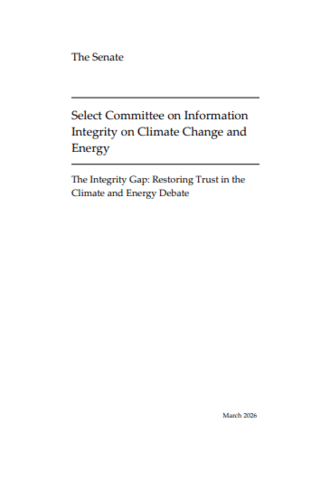
Report
The integrity gap: restoring trust in the climate and energy debate
A report from an inquiry into the prevalence and impacts of misinformation and disinformation relating to climate change and energy in Australia. The report outlines and addresses inquiry participants' views and recommendations. It sets out the prevalence of threats to climate information integrity and an approach to strengthening information integrity in Australia. It provides 21...