

 SHARE
SHARE
Digital news report: Australia 2026

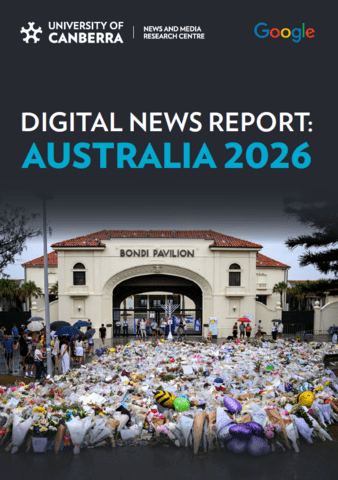
This report shows how news consumption and trust are shaped by external factors, particularly during periods of crisis and political events. The past year was marked by global crises, the Bondi Beach shooting, and the federal election. Many Australians turned to trusted news sources to understand and make sense of these complex developments.
After several years of decline, interest in news has increased, placing Australia well above the global average. This recovery has been driven largely by audiences that typically have low news interest, including women and young people. Interest in politics has also risen among U35s, who now have higher levels of political interest than older cohorts for the first time.
News organisations face the challenge of engaging audiences who are simultaneously curious and cautious, highly connected but resistant to fixed routines or brand loyalty. Predicting future news behaviours – especially among younger cohorts – will become increasingly difficult as habits continue to adapt to new platforms, formats and emerging technologies such as generative AI.
This year’s findings confirm that young people are not disengaged from news; rather, they are gravitating toward formats and voices they perceive as more entertaining, relatable, authentic, and easier to understand than traditional news brands.
Key findings
- Heavy news consumption has risen to 56% (+3), with strong growth among 18-24s (49%, +11).
- Audiences trust my news (54%) more than twice as much as news on social media (21%) or from AI chatbots (19%).
- 60% of 18-24-year-olds have never read a printed newspaper.
- 43% of Australian news consumers get news from creators and influencers.
- News avoidance remains high among Australians (68%).
- Half (49%) of news consumers say Public Service Media (PSM) play a positive role in Australian life.
- U35s are twice as likely than 35+ to pay for news to make sure news content is available free of charge to others.
