

India
Report
Trust Imperative 5.0: building trust in government through practical AI assurance
Governments have moved rapidly from experimenting with artificial intelligence (AI) to deploying it. But a gap has emerged between governments’ ambition to scale AI and their ability to deploy systems with confidence. This report finds that most governments have established AI ethics principles, governance models or national frameworks. The challenge lies in day-to-day execution.
Guide
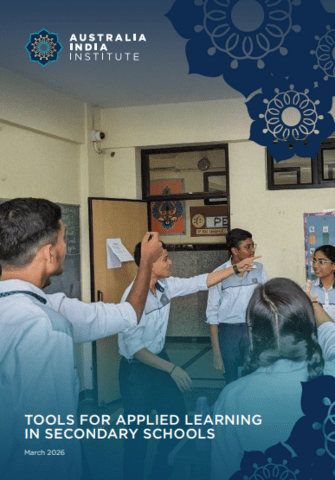
Tools for applied learning in secondary schools
The toolkit is designed to assist all school teachers in implementing applied learning across the subjects they teach. It provides teachers and school leaders with a set of flexible and adaptable guidelines and resources for designing, facilitating and assessing applied learning in a senior secondary school setting.
Report
The regulatory frontier: designing the rules that shape innovation
Technological progress is accelerating, reshaping economies and societies. As new opportunities emerge, the frameworks that govern innovation are becoming just as important as the innovations themselves. This report explores how regulation is evolving from a set of static rules into a form of modern infrastructure – one that enables trust, supports inclusion and strengthens competitiveness.
Strategy
Shared pathways to research futures: Australia-India Research Collaboration Framework 2026–30
The framework sets out a forward-looking roadmap to strengthen interdisciplinary research partnerships between Australia and India. It recognises the strength and diversity of the research ecosystems of both countries and provides a coordinated approach for deepening collaboration and translating research into impactful outcomes for achieving national, regional and global priorities.
Report
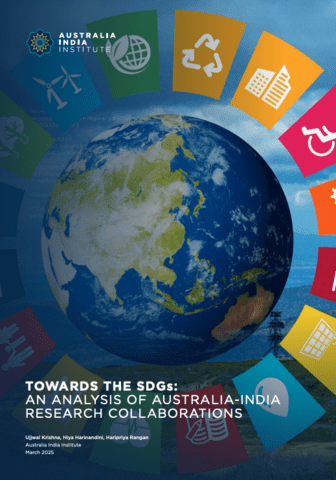
Towards the SDGs: an analysis of Australia-India research collaborations
This report explores the intersection of the Sustainable Development Goals (SDGs) with collaborative research activities between Australian and Indian higher education institutions. It examines how government commitments are reflected in these collaborations and considers the potential of SDGs to serve as a lens to guide deeper, more impactful research partnerships between the two countries.